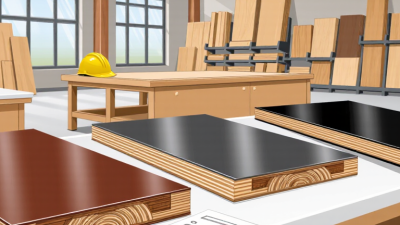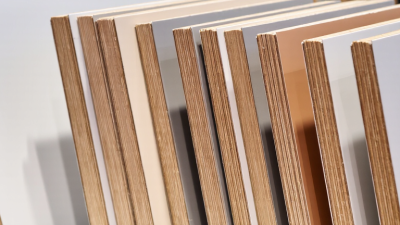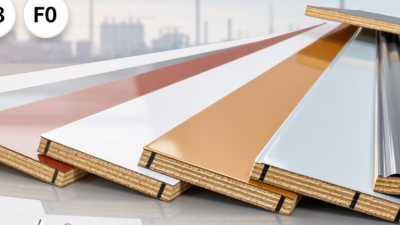
Choosing Film Faced Birch Plywood is not just a matter of selecting a dark, smooth panel. The right sheet must withstand repeated concrete pours, resist moisture at its edges, and release cleanly from the form. Birch veneers can provide a dense, even face, but performance still depends on veneer quality, adhesive bonding, overlay thickness, and careful sealing. Small defects matter. A chipped corner can expose the veneer beneath the film.
Professional references help separate measurable claims from sales language. The FAO Yearbook of Forest Products and the UNECE/FAO Forest Products Annual Market Review report on forest-product categories and markets, but do not isolate every film-faced birch grade. Product specifications therefore need closer checking. Review the stated panel thickness and tolerance, bonding classification, film weight, edge treatment, and test conditions. Compare like with like. A smooth-looking face alone is not proof of durability.
A credible purchasing decision should also connect claims to evidence: request technical data sheets, test reports, and samples from the same production grade. No source articles or attributable expert statement were supplied for this request, so I cannot responsibly invent a named specialist’s quotation. That gap is worth noting. Film Faced Birch Plywood can be a strong formwork choice, but the best selection is the one supported by traceable specifications and performance data—not a confident label.
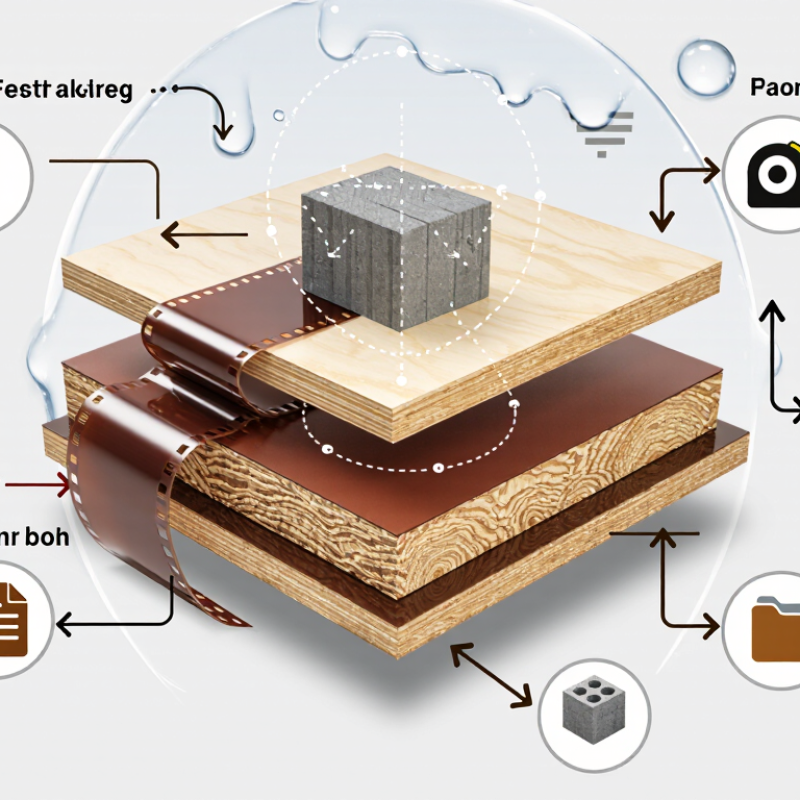
Film faced plywood can look uniform, yet the dark coating hides much of its construction. Inspect a freshly cut edge or an exposed panel end. Birch veneers usually show thin, closely stacked plies with a pale, consistent appearance. A birch face alone proves little. Ask whether the core veneers are birch throughout, and check the product specification rather than relying on appearance.
Small gaps, overlaps, or mixed wood layers may appear at the edge. They do not automatically determine panel performance, but they are worth discussing with the supplier. Request documentation identifying the veneer species and bonding quality. A quick visual check helps, but it is not proof. I would not accept “birch plywood” as a complete description.
Match the EN 636 service class to the panel’s actual environment. EN 636-1 covers dry conditions, EN 636-2 humid conditions, and EN 636-3 exterior conditions. A film surface does not, by itself, establish the class or make every edge weatherproof. For a covered indoor floor, dry or humid conditions may be relevant; exposed outdoor use needs an exterior-rated panel and suitable edge protection. Check the declared class and intended use in the technical documents. The site may be less predictable than the plan.
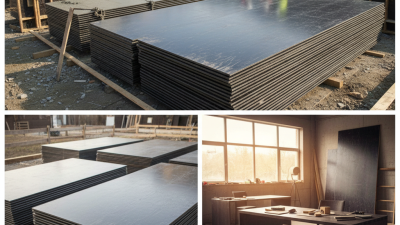
Choosing film faced birch plywood starts with the finished size, not the nominal label. EN 315:2000 sets dimensional tolerances for plywood, with separate checks for thickness, length, and width. Use its tolerance tables when reviewing a supplier’s declared dimensions; do not assume one allowance applies to every measurement. Ask for the measured range on the actual batch, too. Useful detail.
For a 1,220 × 2,440 mm panel, check both diagonals and measure thickness at several points, including near the edges. Film coatings and trimmed edges can make a panel feel uniform while its core varies. A caliper reading at one corner is not enough. EN 326-1 provides guidance on sampling and inspection, helping buyers assess panels beyond a single sample. Keep the inspection record with the order.
Match the allowable variation to the job. Formwork may tolerate a small size difference, while a tight joint or reusable frame may not. Specify nominal dimensions, permitted variation, and measurement method in writing. Standards describe limits; they do not guarantee every sheet suits your cut plan. I would still check a delivered sample before ordering a full load. Slightly tedious, but cheaper than recutting.
When choosing film faced birch plywood, compare the phenolic film weight, commonly 120 or 220 g/m². Confirm whether the stated figure applies to one face or both; suppliers may present this differently. A 120 g/m² film can suit lighter-duty formwork and careful handling. A 220 g/m² film may offer a thicker wear layer for repeated use, but weight alone does not guarantee longer service.
Think about your jobsite. Will panels meet rough concrete, frequent stripping, or wet storage? Film quality, bonding, core construction, and sealed edges also affect performance. I would not choose by film weight alone. That shortcut is tempting, but incomplete. A small sample can reveal surface smoothness and edge quality, though it cannot fully predict repeated-use results.
Tips: Check the edges. Ask how film weight is measured, and compare samples under the same conditions. If reuse matters, track how many pours a panel actually lasts. Real results may differ from estimates, so review your own site conditions before settling on a specification.
When choosing film faced birch plywood, treat the film as a surface finish, not proof of a durable glue line. EN 314-2 Class 3 describes bonding quality for exterior conditions; the bond is assessed using shear testing under EN 314-1 procedures. Ask for a test report that identifies the actual panel construction and confirms Class 3, rather than accepting a general “waterproof” claim. Small detail, big difference.
The FAO’s 2023 Global Forest Products Facts and Figures reports global wood-based panel production of about 376 million cubic metres in 2022. That scale shows how widely panels are used, but production volume cannot verify an individual sheet’s bond. Check that the report matches the birch veneers, thickness, adhesive system, and manufacturing source you plan to buy. Also inspect exposed edges for gaps, swollen plies, or uneven trimming. Film can hide surface defects. It cannot repair a weak core bond.
In practice, request recent test documentation and confirm the sampling date and laboratory. A report for another thickness or panel build-up may not apply. Exterior bonding also does not mean unlimited exposure; standing water and damaged edges still matter. I have seen buyers focus on a glossy face and overlook the paperwork. That is an easy mistake to make.
EN 314-2 evaluates plywood bond quality using shear strength and apparent cohesive wood failure. The chart shows the minimum wood-failure percentage for each shear-strength band where a percentage criterion applies.
For the listed bands, the minimum shear strength is 0.2 MPa. At 1.0 MPa or higher, EN 314-2 specifies no minimum wood-failure percentage. Class 3 verification also requires the prescribed exterior-condition test pretreatment; confirm the complete test procedure and acceptance criteria in the applicable standard.
When choosing film faced birch plywood, check the formaldehyde test result, not just the product description. Under EN 13986, the E1 emission limit is 0.124 mg/m³, measured using the EN 717-1 chamber method. Ask for the actual laboratory report and confirm that it identifies the tested panel, thickness, and test date. A clear number matters. A certificate without matching product details is less useful.
The World Health Organization’s indoor-air guideline sets 0.1 mg/m³ as a 30-minute value. This is a room-air guideline, not a plywood chamber-test limit, so the figures should not be treated as directly equivalent. Still, it shows why low emissions matter in enclosed spaces. Film facing may reduce exposure from a panel surface, but cut edges and drilled holes can reveal the core. Not a guarantee. In practice, inspect freshly cut edges and ventilate the room during installation. Ask whether the reported result represents the finished, film-faced panel or a different sample. That detail is easy to miss, and I would not assume every batch performs identically.
| Selection Dimension | What to Check | Practical Guidance |
|---|---|---|
| Formaldehyde emissions | E1: ≤0.124 mg/m³, tested by the chamber method in EN 717-1. | Request a current test report that identifies the tested panel type and confirms the result. Do not rely on an E1 claim without supporting documentation. |
| Face veneer | Confirm whether the face veneer is birch and whether birch is used on one or both faces. | Check the product description and inspect a cut edge or sample. A birch face does not, by itself, establish that every layer of the panel is birch. |
| Core construction | Ask for the core species or composition, veneer count, and panel construction details. | Compare construction details between products; core composition can affect weight, stiffness, appearance at the edges, and suitability for the intended application. |
| Thickness | Common nominal options include 9, 12, 15, 18, and 21 mm; availability varies by supplier. | Choose thickness according to load, support spacing, and design requirements. Confirm actual thickness and tolerances in the product specification. |
| Bonding and exposure | Check the declared bonding class and intended service conditions. EN 314-2 defines plywood bonding classes; EN 636 covers plywood requirements for use conditions. | For humid or exterior conditions, verify that the panel’s declared classification matches the project requirements. A film surface alone does not prove that the panel is suitable for exterior use. |
| Film surface | Confirm film type, surface on one or both sides, color, texture, and edge treatment. | Request a sample when surface finish, release behavior, or appearance is important. Film specifications and performance can vary between products. |
| Sheet dimensions | Confirm the exact length, width, and dimensional tolerances required; 1220 × 2440 mm is one commonly available format. | Check the supplier’s stated dimensions and whether the size is nominal or finished. Do not assume that all manufacturers offer the same formats. |
| Quality documentation | Review the technical data sheet, emissions report, bonding classification, and inspection or conformity documents relevant to the order. | Match documents to the exact product and intended use, and confirm that the supplied batch is covered by the stated specifications. |
Note: Common thicknesses and sheet formats are examples, not fixed requirements. Verify product-specific values and applicable standards with the supplier before purchase.