Leave Your Message

China Top 10 Plank Plywood Suppliers for Global Buyers?

Choosing a reliable Plank Plywood supplier in China takes more than comparing quoted prices. Buyers also need to check board dimensions, core construction, surface quality, moisture control, and packaging. A sample can reveal details that a catalog photo cannot, such as uneven edges or visible core gaps. Small differences matter.

This guide introduces ten Chinese suppliers for global buyers to research. It outlines practical comparison points, including product range, production capacity, export experience, communication, and available quality documents. Buyers should confirm specifications directly, request current samples where practical, and clarify packing details before placing an order. For example, ask how 18 mm panels are protected on a pallet and whether the quoted dimensions refer to finished boards. Clear answers make comparisons more useful.

No supplier suits every project. Minimum order quantities, lead times, customization options, and shipping arrangements can change by product and season. Claims in brochures also need checking against recent documents and a written quotation. This list is a starting point, not a substitute for supplier due diligence. That distinction matters. A careful buyer may find that the best fit is not the lowest-priced option, but the supplier whose specifications, quality checks, and delivery terms match the job. Some comparisons will remain imperfect; product descriptions are not always consistent across companies. The aim is to help buyers ask better questions before committing.
China Top 10 Plank Plywood Suppliers for Global Buyers?

What Plank Plywood Is and How It Is Made

What Plank Plywood Is and How It Is Made

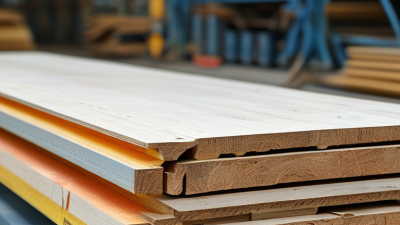
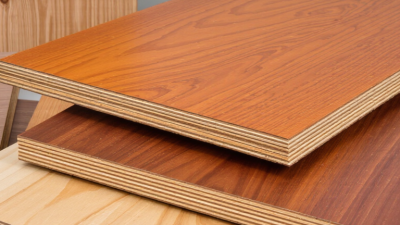
Plank plywood is an engineered wood panel with a board-like surface appearance. The term is not perfectly standardized across international markets. It usually describes plywood made from layered wood veneers, designed to resemble long, solid planks. Unlike solid timber, its cross-laminated structure helps reduce warping and splitting. That distinction matters.

Production begins with peeled or sliced veneers. Manufacturers dry, grade, and arrange them with alternating grain directions. Adhesive is applied between layers before the stack enters a heated press. Pressure and temperature bond the veneers into a stable panel. The surface is then sanded, trimmed, and inspected for gaps, delamination, and uneven thickness. Some panels receive decorative face veneers or protective coatings. In real purchasing work, moisture content and core quality deserve more attention than surface color. A beautiful face cannot repair a weak internal bond. The term can also create confusion, because suppliers may use different thicknesses, grades, and surface standards.

Tips: Request a cross-section photo, technical data sheet, and recent quality inspection record. Check thickness tolerance, formaldehyde emissions, moisture content, and edge condition. Ask for a sample before placing a large order. Small sample checks often reveal sanding marks, open joints, or uneven plank alignment. Suppliers should explain production details clearly, not hide behind attractive photographs.

How to Evaluate Chinese Plank Plywood Suppliers

Evaluating Chinese plank plywood suppliers takes more than comparing quotations. FAOSTAT’s 2022 forest-products data identify China as the world’s leading plywood producer, accounting for roughly two-thirds of reported output; product classifications can affect comparisons. Large production capacity does not guarantee consistent panels.

Ask for veneer species, nominal and actual thickness, core construction, face-grade definitions, and batch-level inspection records. Request recent test results for bonding quality under ISO 12466, and confirm that the tested panel matches the product being quoted.

Check samples against the written specification, not just a polished showroom piece. Measure thickness at several points, inspect edges for gaps, and ask how moisture content is monitored before packing. The USDA Forest Products Laboratory’s Wood Handbook documents how moisture changes affect wood dimensions, so storage and shipment conditions matter too. Ask to see calibration records and traceability from production lot to packing list.

Small details matter.

A factory audit or independent inspection can help verify capacity, but paperwork alone is not proof. I would still treat an unusually low quote cautiously; the weak point may be hidden in core quality, glue performance, or tolerances that become obvious only after cutting.

Profiles of Ten Chinese Plank Plywood Suppliers for Global Buyers

A useful comparison of ten Chinese plank plywood suppliers should examine more than quoted price. The profiles can cover manufacturers specializing in poplar core, hardwood face veneers, film-faced panels, furniture-grade boards, construction panels, and custom dimensions. The remaining profiles should distinguish export documentation, production scale, quality control, packaging, and sample support. These are practical categories, not verified rankings; buyers should confirm each supplier’s current products and capacity directly.

Scale matters. FAO’s Forestry Production and Trade data report global plywood production at roughly 106 million cubic metres in 2022, showing the size of the wider panel market. Yet that figure does not establish any individual factory’s output or reliability. Ask for panel thickness and tolerance records, veneer composition, adhesive specifications, and recent inspection reports. A sample edge can reveal gaps or uneven layers. Still, one sample is not proof of consistent production. Request batch-level checks, clear lead-time estimates, and photographs of protective packing before comparing the ten supplier profiles. Some details may remain difficult to verify remotely; that limitation deserves attention.

China Top 10 Plank Plywood Suppliers for Global Buyers? — Profiles of Ten Chinese Plank Plywood Supplier Categories

These are product-and-sourcing profiles, not verified rankings or named company records. Specifications, certifications, production capacity, origin, and export experience vary by manufacturer and must be confirmed for each quotation and shipment.

Profile Supplier Category Typical Product Focus Key Buyer Checks Useful Documents to Request Suitable Purchasing Consideration
01 General-purpose plywood producer Multi-ply panels for interior construction, furniture, and general woodworking Core construction, veneer quality, thickness tolerance, bonding performance, and face-grade consistency Product specification sheet, test report for the quoted product, and packing details Compare samples and written specifications rather than relying on a product name alone
02 Film-faced formwork plywood producer Coated plywood panels intended for concrete formwork applications Film type, edge sealing, panel dimensions, core quality, and stated reuse conditions Technical data sheet, coating description, inspection records, and shipment packing list Confirm the claimed performance under the buyer’s site conditions; reuse life is not a fixed universal value
03 Commercial plywood producer Decorative and utility panels for interior joinery, cabinets, and fit-out work Face veneer species, appearance grade, sanding, repairs, and permitted visual defects Grading criteria, approved sample, product specification, and applicable emissions documentation Agree on a written visual-grade standard before approving mass production
04 Furniture-panel supplier Plywood panels supplied for furniture components and interior applications Flatness, thickness, screw-holding requirements, surface condition, and machining suitability Dimensional tolerances, sample approval record, and relevant test reports Test the actual panel in the intended machining and finishing process
05 Structural-panel supplier Panels proposed for load-bearing or other specified construction uses Applicable product standard, declared structural grade, span or design requirements, and test scope Current product certification where required, test reports, and traceable batch information Do not assume a general plywood grade is suitable for structural use; check local building rules
06 Moisture-resistant-bonding panel supplier Plywood made with bonding intended for exposure conditions stated by the manufacturer Bond classification, intended exposure, edge protection, and limitations on outdoor use Bonding-class evidence, test method and results, and care or installation guidance “Moisture-resistant” does not automatically mean waterproof or suitable for permanent exterior exposure
07 Special-size and cut-to-order supplier Panels offered in buyer-specified dimensions, thicknesses, or cutting formats Available size range, cutting tolerance, minimum order quantity, yield, and protective packaging Approved cutting plan, dimensional inspection report, and written order confirmation Confirm whether custom sizes affect lead time, price, and the usable area per sheet
08 Veneer-face and decorative-panel supplier Panels with specified face veneers for visible furniture or interior surfaces Species identification, veneer matching, grain direction, color range, and repair policy Face-veneer sample, grade definition, and approved reference images or sample board Define acceptable natural variation and whether sheets must be sequence-matched
09 Low-emission-specification supplier Panels offered to meet buyer or market requirements for formaldehyde emissions Applicable test standard, product scope, test date, laboratory, and covered manufacturing site Valid test report or certification, product identification, and chain-of-custody details if applicable Check requirements in the destination market; emission claims should be verified for the exact product
10 Export-focused panel supplier Plywood prepared for international orders with export packing and shipment coordination Order traceability, packaging suitability, shipment schedule, inspection arrangements, and claim process Pro forma invoice, packing specification, inspection record, and shipment documents as applicable Agree on Incoterms, inspection point, packaging standard, and defect-resolution terms in the contract

Comparing Product Ranges, Certifications, and Export Capabilities

China’s top ten plywood suppliers should be compared by product depth, not catalog size. A reliable supplier may offer commercial plywood, film-faced panels, furniture-grade boards, marine-grade options, and custom thicknesses. Check veneer species, core construction, glue type, surface quality, and moisture performance. A broad range can still hide uneven quality.

Certifications need careful verification. Ask for current FSC chain-of-custody documents when responsible forestry matters. For indoor panels, review formaldehyde test results against CARB Phase 2, EPA TSCA Title VI, or the destination market’s rules. ISO 9001 may indicate controlled processes, but it does not prove every shipment is consistent. Request batch reports, third-party inspection records, and clear testing dates. Documents can look impressive. Details matter more.

Export capability is equally practical. Confirm experience with container loading, moisture-proof packaging, pallet standards, shipping documents, and destination-port delivery. Ask about monthly capacity, lead times, replacement policies, and communication during production. Tips: order samples, inspect the core, and compare actual thickness with stated measurements. A small pilot shipment is safer than a large first order. Some buyers focus too heavily on price; that can create costly rework. Even experienced teams miss this sometimes. Supplier rankings are useful starting points, not final proof. Evaluate factory evidence, product consistency, and after-sales responsibility before signing.

China Plywood Suppliers: A Buyer Evaluation Framework

Illustrative procurement-planning weights—not measured supplier scores or market statistics. Verify each supplier’s product specifications, certificates, and export documents independently.

How to use: Compare panel types, grades, thicknesses, and customization; check that certificates are valid and applicable to the product; and confirm packaging, shipping, and export documentation before placing an order.

How to Verify Suppliers and Plan an International Purchase

How to Verify Suppliers and Plan an International Purchase

A supplier’s website is only a starting point. Request its registered business details, factory address, production capacity, and recent export references. Then arrange a video call or independent factory audit. Ask to see veneer preparation, hot pressing, sanding, and finished-panel storage. These details reveal more than polished product photos. Request a dated sample and confirm its thickness, dimensions, surface quality, moisture level, and bonding requirements in writing. A sample can still differ from bulk production, so define acceptable tolerances before placing an order.

Tips: Compare written quotations line by line. Check panel grade, core material, adhesive specifications, packing method, production time, and shipping terms. Ask who pays for inspection and what happens if the shipment fails agreed checks. Keep records. Small gaps in wording can become expensive later.

Plan backward from the delivery date, allowing time for production, inspection, port handling, and transit. Confirm the destination port, container loading plan, insurance, payment milestones, and document list with your freight forwarder. A pre-shipment inspection can verify random panels, labels, and packaging before the goods leave. Avoid paying the full amount before clear milestones are met. Even careful checks cannot remove every risk; schedules shift, and real production may expose issues that samples miss. Build a modest buffer into both budget and timeline.