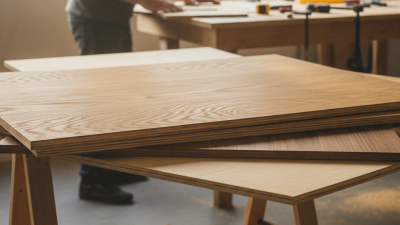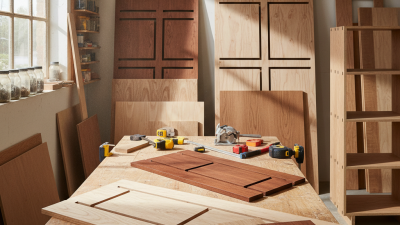
Choosing the right Plank Plywood in 2026 requires more than comparing prices or surface appearance. Global buyers must examine structure, moisture resistance, emissions, certification, and supply consistency. A smooth face can hide weak bonding or uneven internal layers. Small details matter.
Plank Plywood usually refers to plywood designed with a plank-like visual character, often featuring long grain patterns, natural knots, or carefully selected face veneers. Its appearance suits flooring, furniture panels, wall features, and interior joinery. However, visual quality does not prove technical performance. Buyers should request core specifications, veneer thickness, adhesive details, panel tolerances, and test reports before placing large orders. Suppliers with practical experience should explain how panels behave during cutting, transport, installation, and seasonal humidity changes.
International purchasing also requires careful attention to regional standards and project conditions. A panel suitable for a dry office may fail in a humid coastal environment. Formaldehyde documentation, fire performance, packaging, and traceability can affect acceptance at the destination. Requirements differ between markets, so reliable verification remains essential. Independent testing is valuable when supplier documents appear incomplete or outdated. That step may slow procurement, but it can prevent expensive replacements.
This guide compares major Plank Plywood types for global buyers, including appearance grades, core constructions, and application-focused options. It also considers sourcing risks, responsible timber claims, and practical inspection methods. Some recommendations will depend on budget and project design. There is no universal best panel. Careful questioning still beats confident assumptions.
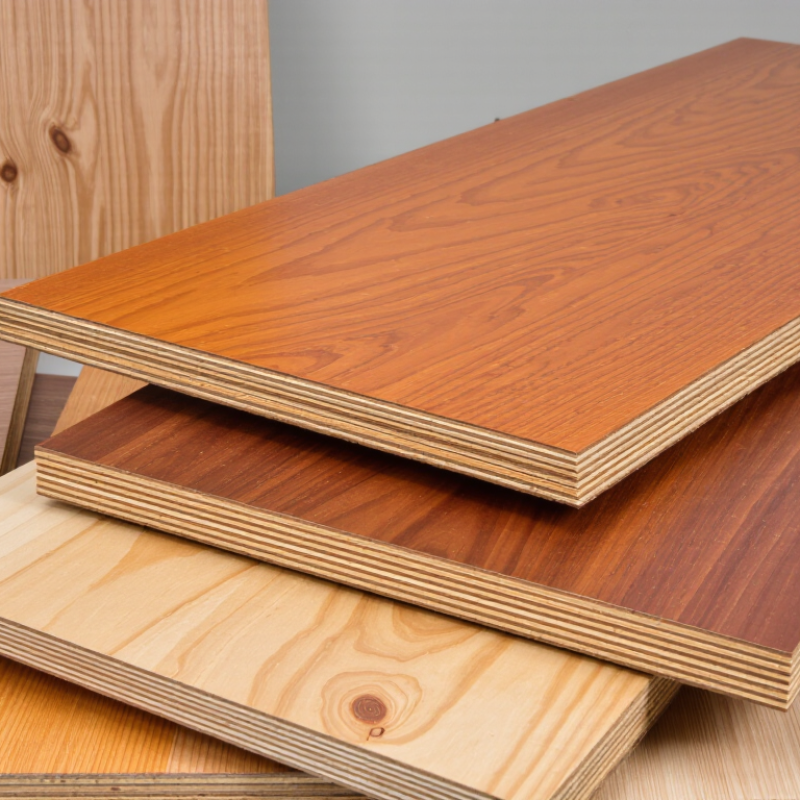
Plank plywood is not a universally fixed technical category. In global trade, it usually describes plywood panels with plank-like width, long dimensions, or a visually continuous wood surface. The term can mislead buyers. Classification should begin with construction: three-ply, multi-ply, or composite-core panels. It should then consider veneer species, face grade, thickness, and bonding performance.
FAOSTAT’s Forest Products database records plywood as a separate panel category, showing why buyers should not confuse it with solid planks or oriented strand board. Standards such as EN 636 and PS 1 classify plywood by intended exposure and structural performance. Interior panels suit dry rooms. Exterior-rated panels require stronger moisture resistance. Structural grades demand documented bending and bonding tests. Surface classes also matter: A-grade faces allow cleaner appearance, while lower grades may contain knots, patches, and open repairs.
On site, I check panel thickness with a caliper, inspect edge gaps, and look for bubbling after conditioning. Small defects matter. A supplier may call a panel “plank plywood,” but that label alone proves little.
The UNECE/FAO Forest Products Annual Market Review highlights continued volatility in wood-panel trade, making traceable specifications more valuable than attractive wording. Buyers should request species, core layout, density, adhesive class, emissions data, tolerance limits, and test reports. One practical weakness remains: grading terms differ between markets, so a familiar label can still hide inconsistent quality.
Plank plywood is not one uniform product. Its strength depends on core construction, veneer direction, adhesive quality, and panel thickness. Softwood plank plywood usually offers a lighter structure and lower cost. It suits wall sheathing, temporary flooring, and general interior work. Hardwood plank plywood has denser veneers and better resistance to dents. It performs well in furniture, vehicle interiors, and high-traffic areas.
The core makes a major difference. A veneer-core panel contains thin wood layers arranged in alternating directions. This design improves stability and reduces splitting along the grain. A laminated core may provide a flatter surface, but its performance depends heavily on bonding accuracy. Multi-layer structural plywood normally carries loads more reliably than decorative plank panels. Marine-grade construction can resist moisture better, but it is not automatically waterproof after installation.
Check the panel face, edge, and certification documents. A clean edge should show tight, consistent layers without large gaps. For humid regions, buyers should confirm adhesive classification and formaldehyde emissions. Local standards may differ. Do not rely on appearance alone. A visually attractive plank surface can hide weak bonding or uneven thickness. In site inspections, small edge voids often reveal larger manufacturing problems. This detail is easy to miss. It deserves a second check.
For global buyers, plywood performance begins inside the panel, not on its sanded face. Core construction controls stiffness, screw holding, weight, and moisture movement. The USDA Forest Products Laboratory’s Wood Handbook (2021) lists oven-dry densities from about 300 to above 1,000 kg/m³ across common wood species. That spread matters. Lightweight softwood or poplar cores reduce shipping weight, while denser hardwood veneers improve surface hardness and fastener retention. A mixed core can balance both, but uneven veneer thickness may create weak spots. I have seen panels pass visual inspection and still flex excessively at the center.
Thickness changes performance sharply. In simplified beam theory, bending stiffness rises with thickness cubed. A 20% increase can raise theoretical stiffness by about 73%, assuming identical layup and material quality. The assumption is imperfect. Voids, poor bonding, and unbalanced plies can erase that gain. Buyers should request calibrated thickness, veneer count, core-void limits, modulus of elasticity, and bending-strength results. The USDA report also notes that moisture changes can affect wood dimensions and mechanical behavior.
Grade determines service exposure. EN 636 classifies plywood for dry, humid, or exterior conditions, while EN 314-2 addresses bonding quality. Exterior grade does not mean unlimited weather resistance. Edges still need sealing, and face veneers need suitable protection. Ask for batch traceability, formaldehyde classification, moisture content, and recent third-party test dates. Cheap panels often become expensive after swelling, delamination, or rework.
| Plywood Type / Core | Typical Core Material | Common Thicknesses | Typical Density Range | Recommended Bond Class | Surface Grade Options | Strength & Stiffness | Dimensional Stability | Moisture Performance | Typical Applications | Key Buying Considerations |
|---|---|---|---|---|---|---|---|---|---|---|
| Birch Multi-Ply Plywood | Multiple thin birch veneers with cross-laminated construction | 6–30 mm | 650–750 kg/m³ | Interior: EN 314-2 Class 1 Moist conditions: Class 2 when specified |
BB/BB, BB/CP, CP/CP; clear faces available | High High bending strength and screw-holding capacity |
High Uniform structure and low void content |
Moderate Requires suitable glue and edge protection |
Furniture, workbenches, vehicle interiors, precision components, heavy-duty shelving | Check veneer thickness, panel flatness, formaldehyde class, and edge quality. Higher weight increases freight cost. |
| Poplar Core Plywood | Poplar veneers, often combined with hardwood face and back veneers | 3–30 mm | 400–550 kg/m³ | Class 1 for dry interiors; Class 2 for humid service when certified | B/BB, BB/CC, CP/CP and utility grades | Medium Good for lightweight, non-structural panels |
Medium Acceptable when properly pressed and balanced |
Moderate Not intended for prolonged wet exposure |
Interior furniture, doors, partitions, packaging, lightweight cabinetry | Offers low weight and easy machining. Verify core joint quality and resistance to screw withdrawal. |
| Eucalyptus Hardwood Plywood | Eucalyptus veneers or eucalyptus-dominant mixed hardwood veneers | 5–25 mm | 550–700 kg/m³ | Class 2 for humid interiors; Class 3 only with verified exterior-grade adhesive | BB/CC, CP/CP, utility, film-faced options | High Good load capacity and impact resistance |
Medium Varies with drying, veneer quality, and lay-up |
Moderate to High Depends heavily on adhesive system and sealing |
Construction panels, flooring underlayment, furniture, concrete formwork | Inspect for core gaps, overlapping joints, face checking, and panel moisture content before shipment. |
| Mixed Hardwood Plywood | Combination of several hardwood species selected for availability and cost | 6–30 mm | 500–700 kg/m³ | Class 1 or Class 2 depending on adhesive and intended service | BB/CC, CP/CP, C/D and packaging grades | Medium to High Performance varies between production lots |
Medium Species variation can affect movement |
Moderate Use exterior-grade bonding for outdoor exposure |
General construction, transport packaging, pallets, shelving, shopfitting | Request the species mix, density range, veneer thickness, and technical test reports rather than relying only on the term “hardwood.” |
| Radiata Pine Structural Plywood | Rotary-cut softwood veneers from plantation-grown pine | 9–25 mm | 450–600 kg/m³ | Structural exterior bond when certified for the relevant end use | Structural grades, C/C, C/D and sanded grades | High Efficient strength-to-weight ratio |
High Consistent lay-up when manufactured to a structural standard |
High Suitable grades can be used in covered or exterior structural applications |
Roofing, wall and floor sheathing, packaging, structural framing systems | Confirm span rating, structural standard, visual grade, preservative treatment, and service environment. |
| Okoume-Core Marine-Grade Plywood | Lightweight hardwood veneers with fully bonded, low-void core construction | 4–25 mm | 430–550 kg/m³ | Exterior or marine-grade adhesive; BS 1088-type specifications may apply | Selected faces with limited repairs; marine appearance grades | Medium Lightweight with good panel efficiency |
High Low voids and balanced construction support stability |
High Requires complete coating and correctly sealed edges |
Boatbuilding, marine interiors, vehicle fit-outs, lightweight outdoor structures | Marine grade does not mean maintenance-free. Check species, glue line durability, core void limits, and certification scope. |
| Film-Faced Construction Plywood | Hardwood, softwood, or mixed veneer core covered with phenolic film | 12–21 mm | 500–700 kg/m³ | Exterior bond; performance depends on glue, film, and edge sealing | Dark or light phenolic film; smooth or embossed surface | High Designed for repeated formwork loads when properly supported |
Medium to High Core quality and panel balance are critical |
High Film reduces water ingress but does not eliminate edge absorption |
Concrete formwork, scaffolding platforms, transport floors, industrial platforms | Compare film weight, number of reuses, edge treatment, panel thickness tolerance, and allowable deflection. |
| Structural Softwood Plywood | Spruce, fir, pine, or other softwood veneer lay-up | 9–30 mm | 400–550 kg/m³ | Structural Class 2 or Class 3 according to the specified standard and exposure | Structural C/C, C/D, D/D and sanded grades | High Suitable for engineered load-bearing designs |
Medium to High Depends on veneer orientation, grading, and moisture control |
Moderate to High Exterior exposure requires an appropriate bond class and coating |
Roof and wall sheathing, flooring, crates, temporary structures | Buy by certified structural grade and performance values, not by wood species alone. |
| Flexible Plywood | Thin, cross-banded veneers designed for controlled bending | 3–9 mm | 350–600 kg/m³ | Usually interior bond unless an exterior specification is stated | Sanded, paint-grade, decorative face grades | Purpose-Specific Good flexibility but lower structural capacity |
Medium Must be fixed to a stable former or frame |
Low to Moderate Use only with suitable adhesive and protective coating outdoors |
Curved furniture, columns, display units, acoustic features, interior fit-outs | Specify minimum bending radius, grain direction, number of plies, and permitted surface defects. |
| Decorative Face Plywood | Stable structural core with hardwood or natural decorative face veneer | 6–25 mm | 450–750 kg/m³ | Selected according to interior, humid, or exterior service conditions | Natural veneer faces, A/AA, A/B, B/BB and matched patterns | Medium to High Depends mainly on the core and panel construction |
High Balanced lay-up helps reduce cupping and warping |
Moderate Decorative veneers need sealing against moisture |
Wall panels, cabinetry, doors, furniture, retail and hospitality interiors | Approve a physical sample for color, grain matching, repair plugs, veneer thickness, and finish compatibility. |
For global buyers, plank plywood should match the application, climate, and handling conditions. Interior furniture often benefits from birch or poplar-core panels. Their smooth faces support clean cutting, painted surfaces, and concealed joinery. Birch offers stronger screw holding, while poplar reduces weight and shipping costs. Both need sealed edges in humid rooms. Small details matter.
For kitchens, bathrooms, and covered exterior areas, moisture-resistant plywood is a safer choice. Marine-grade panels suit demanding wet environments when their glue system and face quality are verified. They are not automatically suitable for permanent immersion. For flooring, platforms, and work surfaces, choose thicker structural panels with stable veneers and tested bending strength. A textured surface can improve grip, but it may complicate cleaning. In rural projects, repairability can matter more than a perfect finish.
Packaging and temporary protection call for lightweight softwood plywood. It cuts quickly and lowers transport weight. Heavy machinery cases need thicker sheets, stronger fasteners, and reinforced corners. Check formaldehyde emissions, panel tolerances, moisture content, and applicable import standards before ordering. Ask for recent test reports, not only a sales description. A practical mistake is choosing by price alone; warped edges can consume labor and delay installation. Sample panels before a full container purchase. Color, core gaps, and surface repairs may vary between batches. No sheet fits every market.
For global buyers, the best plank plywood depends on use, climate, and installation method. Birch plywood offers a dense surface and clean machining. Poplar plywood is lighter and often costs less. Marine-grade panels suit humid areas, but buyers must verify the actual construction. A waterproof face does not guarantee waterproof bonding.
Quality comparison should begin with measurable details. Check thickness tolerance, core gaps, surface repairs, moisture content, and panel flatness. Ask for recent laboratory reports, not only factory photographs. Relevant standards may include EN 636, EN 314, or ASTM testing, depending on the destination and application. Confirm the test scope and issuing laboratory. Standards are useful, but paperwork can still hide weak production control.
Price needs a wider calculation. Compare panel cost, packaging, loading efficiency, freight, duties, inspection, and expected waste. A cheaper sheet may create more trimming loss or replacement claims. Request samples from the same production batch as the planned order. Inspect the edges after cutting. Look for open voids, uneven layers, and glue bleed. Supplier reliability also matters. Review production capacity, lead times, traceable complaints, and payment terms. I would not rely on one sample alone. It can be unusually good. No comparison is perfect, and buyers should record their assumptions before choosing a supplier.
Indicative wholesale price bands by plywood type, quality level, and commonly referenced international standards
Prices are indicative global wholesale ranges in USD per cubic metre and vary by thickness, wood species, grade, order volume, certification, freight, and destination. Structural plywood is commonly assessed under EN 636 or equivalent structural specifications; marine plywood is commonly evaluated against EN 314-2 bonding classes; formaldehyde requirements may reference EN 13986, CARB Phase 2, or equivalent local regulations. Buyers should request current mill quotations, test reports, grading documents, and pre-shipment inspection records.