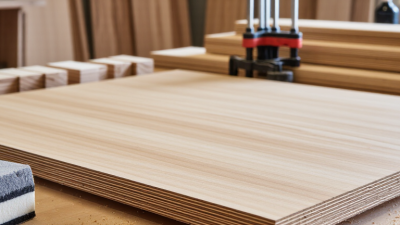
Choosing the right Flooring Lumber supplier can determine whether a project stays on schedule, within budget, and visually consistent. Global buyers need more than attractive product photographs. They need stable species selection, accurate grading, responsible sourcing, moisture control, and dependable export coordination. Oak, walnut, ash, and engineered wood can behave differently across humid ports, heated interiors, and seasonal climates. Small details matter. A warped board can delay installation.
Brett Miller, Vice President of Technical Standards at the National Wood Flooring Association, notes, “Wood flooring is a natural product, and every piece is unique.” This reminder helps buyers assess suppliers realistically. Even experienced manufacturers cannot eliminate every variation in grain, color, or texture. That is part of wood’s character, but it also requires careful inspection and clear specifications.
This guide examines China’s top Flooring Lumber suppliers through practical criteria. These include production capacity, kiln-drying systems, quality control, species availability, packaging, certifications, and communication standards. Supplier claims should be checked against samples, inspection records, and recent buyer feedback. A polished website is not enough. Ask for moisture readings. Review packaging photos. Confirm replacement procedures before payment.
The ranking may not suit every project. A residential developer may value design flexibility, while a commercial buyer may prioritize volume and delivery certainty. Some information can also change over time. That limitation deserves attention. Still, this comparison offers a useful starting point for global buyers seeking reliable wood flooring partners from China.
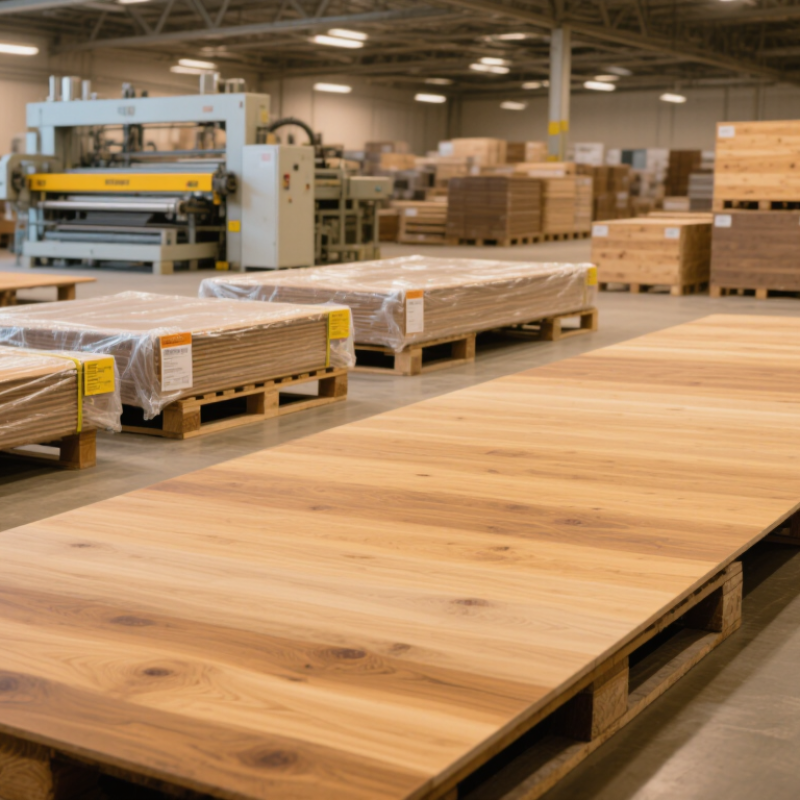
China’s flooring lumber industry serves a wide range of global buyers. Production is concentrated near major timber-processing and manufacturing regions. These areas offer cutting, kiln drying, grading, and surface treatment in one supply chain. That integration can reduce handling time and improve order consistency.
A reliable supplier should provide moisture readings, species details, grade rules, and packing photographs. For finished flooring, moisture content often needs careful control before shipment. A small difference can cause gaps, cupping, or installation delays after arrival. Buyers should also check whether the supplier follows accepted testing and traceability practices. Documents matter. So does the factory floor.
China’s top flooring lumber suppliers usually compete through flexible volumes and customized dimensions. Some handle small trial orders, while others focus on container-scale production. Global supply conditions remain uneven, with freight costs, timber availability, and currency changes affecting quotations. A low price can mislead when packaging is weak or replacement terms are unclear. I have found that samples rarely show every production risk. Batch inspections are more informative. Even then, no inspection removes uncertainty completely. Buyers should compare lead times, defect allowances, treatment records, and export experience before choosing a long-term partner. Regional supply strength is valuable, but communication discipline often decides whether that strength becomes dependable performance.

Selecting China’s top 10 flooring lumber suppliers requires more than comparing prices or factory size. Global buyers should examine timber legality, species accuracy, moisture control, grading, and export documentation. FAO’s Global Forest Resources Assessment 2020 reports that forests cover about 31% of global land. This highlights the need for responsible sourcing and traceable supply chains.
A practical selection process should combine factory audits, laboratory tests, and verified shipment records. Inspectors can check kiln schedules, board thickness, surface defects, packaging, and storage conditions. Moisture content should match the target installation environment, not merely the supplier’s standard sheet. The UNECE/FAO Forest Products Annual Market Review shows continued volatility in forest-product markets. Therefore, reliable suppliers need stable production, transparent pricing, and flexible delivery planning.
30% Technical evidence deserves the highest weight. Buyers should request recent test reports, chain-of-custody documents, product samples, and references from comparable projects. A useful scorecard might assign 30% to product quality, 25% to traceability, 20% to production capacity, 15% to service reliability, and 10% to cost. No scorecard is perfect. Some suppliers perform well during audits but disappoint during peak seasons. Independent pre-shipment inspections remain worthwhile. The final list should reflect repeatable performance, not impressive factory photography.
China’s top 10 flooring lumber suppliers reflect a broad manufacturing network, from engineered oak to bamboo and reclaimed wood. Their profiles differ in drying systems, grading methods, export experience, and customization capacity. Some operate large kilns, while others focus on smaller, carefully selected batches. This difference matters to global buyers.
A reliable supplier should provide moisture readings, species documentation, product samples, and clear packaging details. Experienced exporters usually understand container loading, fumigation requirements, and destination-market standards. Still, paperwork can contain gaps. A polished catalog is not proof of consistent quality. Buyers should compare recent inspection records with delivered samples. Check the edges, tongue-and-groove fit, finish uniformity, and carton protection. Small defects become expensive after installation.
Tips: Request a trial order before signing a large contract. Confirm moisture levels with an independent test when possible. Ask how rejected boards are handled. Clarify tolerances, replacement terms, lead times, and payment milestones in writing. Suppliers with transparent answers often inspire greater confidence. However, even strong suppliers may have uneven batches during busy seasons. That deserves attention. One practical mistake is judging price before calculating waste, duty, inland transport, and installation risk. A cheaper board may cost more after sorting. Profiles should guide research, not replace factory verification, reference checks, and careful purchasing judgment.
Typical product-specification benchmarks used when comparing export-oriented flooring lumber suppliers.
The chart compares common nominal thickness benchmarks across major flooring product categories. Actual specifications vary by construction, grade, installation system, and target market. Engineered flooring commonly uses a 2–6 mm hardwood wear layer, while solid hardwood flooring is often produced at approximately 18–20 mm.
China’s top 10 flooring lumber suppliers serve buyers with solid, engineered, parquet, and stair flooring products. Solid oak remains popular for its strength, visible grain, and repairable surface. Engineered flooring offers better dimensional stability in changing climates. Ash, walnut, beech, and maple provide different colors, hardness levels, and design effects.
Species selection requires more than appearance. Buyers should request botanical names, moisture data, grading rules, and responsible sourcing documents. Samples matter. A reliable supplier can explain whether timber is kiln-dried to a controlled range, usually suitable for indoor flooring applications. Some suppliers also provide smoked, brushed, hand-scraped, or wire-textured surfaces. These details affect cleaning, lighting, and long-term wear.
Manufacturing capability separates a trading office from a dependable factory. Look for multi-layer pressing lines, accurate tongue-and-groove milling, calibrated sanding, and finish testing. Factory audits should include kiln records, batch tracking, packaging checks, and inspection procedures. Custom widths and lengths may be available, but unusual dimensions can increase waste and lead time. Ask for pre-production samples and compare them under natural light. Even experienced buyers can overlook color variation between batches. That weakness deserves attention, not decoration. Reliable communication, realistic production schedules, and transparent defect policies often matter as much as the wood itself.
Supplier identities are intentionally omitted. The table summarizes common, verifiable product and manufacturing profiles in China's flooring lumber sector.
| No. | Supplier Profile | Main Manufacturing Region | Primary Flooring Lumber Products | Common Wood Species | Typical Moisture Content | Manufacturing Capabilities | Surface and Profile Options | Export and Quality Support |
|---|---|---|---|---|---|---|---|---|
| 1 | Large-scale solid flooring lumber producer | Shandong and Jiangsu | Solid oak flooring blanks, engineered flooring lamellas, unfinished boards | European oak, American red oak, ash, maple | 6%–10% for interior flooring applications | Kiln drying, computerized grading, finger-jointing, multi-rip sawing, precision sorting | Unfinished, brushed, smoked, oiled, UV-lacquered; tongue-and-groove or click profiles | Private-label packing, moisture reports, batch traceability, export documentation |
| 2 | Engineered flooring component specialist | Zhejiang and Jiangsu | Oak wear layers, multi-layer flooring panels, structural core boards | European oak, birch, poplar, eucalyptus | 6%–9%, adjusted to destination climate | Veneer peeling, lamella grading, hot pressing, adhesive application, panel calibration | Sawn, sliced, wire-brushed, matte lacquered, natural-oil finished | Custom dimensions, formaldehyde testing, glue specification records, palletized loading |
| 3 | Hardwood flooring and stair-tread manufacturer | Guangdong and Guangxi | Solid hardwood planks, stair treads, nosing, matching accessories | American walnut, white oak, teak, acacia, ash | 8%–12% depending on product and market | Kiln drying, edge-gluing, CNC machining, precision sanding, custom profiling | Smooth, hand-scraped, distressed, beveled, square-edge and micro-beveled options | Project quotations, sample approval, carton labeling, inspection before shipment |
| 4 | Bamboo flooring and wood-alternative supplier | Zhejiang and Fujian | Horizontal bamboo flooring, strand-woven bamboo, bamboo flooring panels | Moso bamboo; oak and eucalyptus for mixed product lines | 6%–10% for finished interior products | Carbonization, strip processing, hot pressing, formaldehyde-controlled bonding, profiling | Natural, caramelized, stained, matte lacquered, click-lock and tongue-and-groove | Product testing for dimensional stability, abrasion resistance and emissions |
| 5 | Oak flooring and European-market specialist | Jiangsu and Shandong | European oak planks, engineered oak flooring, parquet blocks | European oak, ash, beech, walnut | 7%–10% for residential flooring | Grade selection, kiln drying, finger-jointing, three-layer pressing, CNC cutting | Rustic, select and natural grades; brushed, smoked, stained and UV-oiled finishes | European-style grading references, technical data sheets and container consolidation |
| 6 | Outdoor and thermally modified wood supplier | Jilin and Heilongjiang | Decking boards, exterior flooring lumber, garden walkway boards | Pine, spruce, larch, ash and poplar | 12%–18% for outdoor applications | Thermal modification, preservative treatment, kiln drying, anti-slip machining | Ribbed, grooved, smooth, rounded-edge and concealed-fastener profiles | Outdoor-use specifications, treatment records, end-sealing and export packing |
| 7 | Pine and softwood flooring lumber producer | Heilongjiang and Inner Mongolia | Pine planks, knotty flooring, wall and ceiling boards | Scots pine, Korean pine, spruce, fir and larch | 8%–12% for indoor products | Resawing, kiln drying, defect cutting, finger-jointing, sanding and coating | Natural knots, clear grade, whitewashed, painted, brushed and matte finishes | Moisture inspection, visual grading, custom lengths and protective corner packing |
| 8 | Parquet and decorative flooring component supplier | Zhejiang and Anhui | Parquet blocks, herringbone strips, chevron components and mosaic panels | Oak, walnut, ash, maple and beech | 7%–10% for indoor installation | Short-length optimization, precision cross-cutting, beveling, panel assembly and sanding | Herringbone, chevron, basket weave, geometric mosaic and custom layouts | Small-format sampling, layout drawings, lot identification and export cartons |
| 9 | High-volume laminated flooring board manufacturer | Jiangsu and Anhui | Multi-layer boards, plywood-core flooring, wide-plank components | Oak, birch, poplar, eucalyptus and rubberwood | 6%–10% depending on board construction | Core veneer production, hot pressing, panel calibration, tongue-and-groove machining | Wide planks, long-strip boards, square edge, bevel edge and click systems | Production scheduling, third-party inspection coordination and container loading plans |
| 10 | Custom architectural flooring and project supplier | Guangdong and Jiangxi | Custom solid flooring, engineered flooring, stair parts and commercial project boards | Oak, teak, walnut, acacia, merbau and ash | 8%–12%, based on project specifications | CNC profiling, custom sizing, color matching, sanding, coating and sample production | Custom stains, aged effects, hand-scraped textures, anti-slip surfaces and special dimensions | Shop drawings, approval samples, batch control, installation guidance and project logistics |
China’s top 10 flooring lumber suppliers should be assessed through evidence, not attractive catalogs. Experienced buyers request species details, origin records, grading rules, and recent inspection reports. Moisture content commonly needs tight control, often around 6% to 10%, depending on the destination climate. Kiln-drying records, dimensional tolerance, surface finish, and edge stability also deserve close attention. Ask for samples from different production batches. One perfect board proves very little.
Export capability matters as much as timber quality. Reliable suppliers provide clear quotations, packing specifications, loading photographs, and complete shipping documents. Confirm their experience with your port, preferred trade terms, and required product declarations. Strong suppliers explain lead times honestly and describe how they handle damaged cartons or moisture claims. Third-party inspections can verify quantity, grade, packaging, and container conditions before shipment. Small details matter.
Buyer evaluation should include factory capacity, quality-control staff, response speed, and traceable sourcing. Request references from comparable overseas projects, not only domestic sales. Check whether technical data matches the physical sample. It sometimes does not. A supplier may promise stable color, while natural wood still shows variation. That is normal, but it must be disclosed. No checklist is perfect. Buyers should record test results, approve a written sample standard, and review performance after the first shipment. Long-term reliability is measured after problems appear.