China Best Structural Wood Panel Suppliers
Choosing among China’s best Structural Wood Panel suppliers requires more than comparing prices or polished catalogues. It requires evidence.
Reliable manufacturers show how panels are made, tested, stored, and shipped. Their factories should demonstrate controlled pressing temperatures, calibrated moisture meters, clean adhesive systems, and traceable timber sources. A serious supplier can provide product data, independent test reports, and documentation for relevant standards. These details matter when panels face roof loads, wall stresses, changing humidity, or demanding construction schedules.
Architect Michael Green has observed, “Wood is the only structural material that grows.” That idea gives engineered wood genuine environmental value, but it also demands responsible sourcing and careful design. Structural Wood Panel products may include plywood, oriented strand board, laminated veneer lumber, and other engineered solutions. Each option performs differently. Thickness, density, bonding quality, edge treatment, and moisture resistance can change the final result.
The strongest Chinese suppliers combine manufacturing capacity with practical technical support. They help buyers select panel grades, review drawings, confirm packaging, and manage container loading. Some even provide sample testing before production begins. That is useful.
Still, no supplier is perfect. A low price may hide inconsistent tolerances, delayed replies, or weak after-sales support. Buyers should check factory experience, export records, quality controls, certifications, and customer references before signing contracts. Product claims also need independent verification. This guide examines leading Chinese suppliers through those practical measures, while recognizing that “best” depends on project requirements, location, budget, and risk tolerance.
Types of Structural Wood Panels Supplied by Chinese Manufacturers
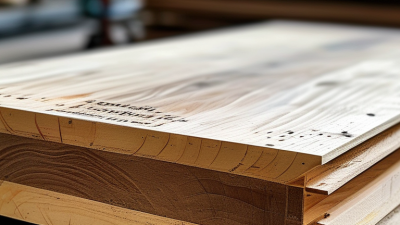
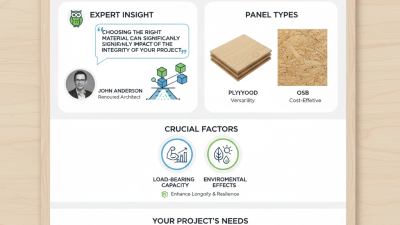
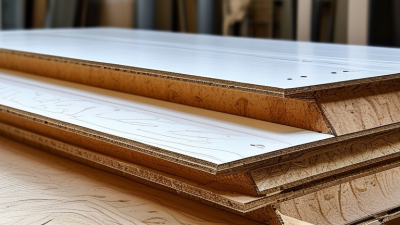
Chinese manufacturers supply several structural wood panel types for roofs, floors, walls, and engineered beams. Plywood remains widely specified because its cross-laminated veneers resist splitting and provide stable load transfer. Structural plywood commonly uses softwood or hardwood veneers, with thicknesses often ranging from 9 to 25 millimetres. Oriented strand board, or OSB, uses aligned wood strands bonded in layers. It offers consistent dimensions and efficient material use.
Laminated veneer lumber, known as LVL, is also supplied for headers, joists, and edge members. It is not a panel in every application, but buyers often source it with structural plywood or OSB. The FAO Global Forest Products Facts and Figures 2023 reported global wood-based panel production at approximately 400 million cubic metres in 2022, with China contributing the largest share. This scale supports broad production capacity, yet capacity does not guarantee structural reliability.
Experienced buyers should check bending strength, panel stiffness, formaldehyde emissions, moisture resistance, and thickness tolerance. Test reports should identify standards such as EN 13986, ASTM requirements, or applicable Chinese GB/T standards. OSB may perform well in dry wall systems but needs careful edge sealing in humid environments. Plywood can look excellent on the surface. The core may still contain weak repairs. Requesting mill certificates, production samples, and third-party testing reduces that risk. The UNECE/FAO Forest Products Annual Market Review 2023–2024 also highlights continuing demand for engineered wood products, driven by construction efficiency and lower material waste.
China Best Structural Wood Panel Suppliers - Types of Structural Wood Panels Supplied by Chinese Manufacturers
The chart shows representative commercial thickness ranges commonly specified for structural wood panels. Structural plywood and OSB are widely used for sheathing and flooring, LVL is used for beams and structural components, and CLT is used for mass-timber walls, floors, and roofs. Actual dimensions vary according to engineering requirements, applicable standards, and project specifications.
Key Standards for Evaluating China’s Wood Panel Suppliers
Selecting China’s best structural wood panel suppliers requires more than comparing prices. The key test is repeatable quality under real construction conditions. Ask for panel type, grade, thickness tolerance, density, bending strength, and intended load use. Request recent test reports, not generic brochures. In practice, a 12-millimeter sheet should be checked with calibrated tools before approval. Measure twice.
Relevant standards may include EN, ASTM, or local building requirements, depending on the destination market. Confirm formaldehyde emissions, fire performance, moisture resistance, and adhesive safety through accredited laboratories. Check whether each certificate matches the exact product, factory, and production date. A supplier should explain batch tracing from log intake to pallet labeling. Factory visits can reveal storage problems, such as damp corners, damaged edges, or uncovered panels. Paper is not proof.
Reliable suppliers also provide corrective-action records, stable lead times, packaging details, and clear claims procedures. Compare sample results with mass production, because a perfect sample may not represent weekly output. Ask how workers control pressing temperature, curing time, sanding, and moisture content. These details show process knowledge, not sales confidence. Independent inspection is valuable for first orders and major specification changes. Still, no audit removes every risk. Allow for retesting, weather-related delays, and honest disagreement over defects. A careful evaluation stays evidence-based and leaves room to revise the supplier list.
Leading Regions and Manufacturing Hubs for Structural Wood Panels
China Best Structural Wood Panel Suppliers
China’s structural wood panel industry is concentrated around several practical manufacturing hubs. Shandong and Jiangsu have strong plywood, LVL, and engineered panel capacity. Zhejiang and Fujian also support export-oriented production, with established logistics near major ports. In the northeast, Heilongjiang benefits from forestry resources and related wood-processing experience.
These regions are not identical. Some factories specialize in construction plywood, while others focus on OSB, LVL, or specialty panels. Buyers should examine veneer quality, core gaps, adhesive performance, and pressing consistency. A reliable supplier can provide test reports, production records, and samples from current batches. Moisture resistance matters too. Panels stored in a humid warehouse may warp before installation. That detail is easy to miss.
Tips: Ask for a factory audit, not only product photos. Check thickness tolerance with a caliper. Request emissions and structural test documents for the target market. Compare shipping distance, packaging strength, and replacement procedures. A low quotation can hide weak grading or unstable supply. I have found that clear specifications prevent more problems than aggressive price negotiation. Still, no checklist is perfect; independent testing remains sensible for large projects.
Supplier Selection Factors: Quality, Capacity, and Certifications
China Best Structural Wood Panel Suppliers
Selecting a Chinese structural wood panel supplier requires more than comparing quoted prices. Quality begins with stable raw materials, controlled moisture, and repeatable pressing conditions. FAO’s 2023 forest products data place global wood-based panel production at roughly 400 million cubic metres, making process consistency increasingly important. Ask for recent test reports covering bending strength, thickness swelling, bonding performance, and formaldehyde emissions. A clean factory floor helps, but laboratory evidence matters more.
Capacity should be verified at the production line, not accepted from a sales sheet. Request monthly output, current utilization, drying capacity, and contingency plans for resin or timber shortages. During a factory visit, inspect panel edges, pallet protection, and moisture readings from finished stock. A supplier may claim large capacity yet struggle with small, customized orders. That contradiction deserves attention. Certification also needs careful checking. ISO 9001 supports quality management, while FSC or PEFC chain-of-custody certification addresses responsible material sourcing. Product compliance should match the destination market, such as EN 13986, EN 300, or applicable ASTM requirements. Certificates must show the correct factory, product scope, and valid dates.
Tips: Order samples from two production batches. Test them independently when the project is safety-sensitive. Check whether emission class, structural grade, and thickness tolerances appear on each document. Certification is useful, not magical. A supplier with excellent paperwork can still deliver inconsistent panels. Keep written inspection criteria, retain samples, and compare shipment results against the approved benchmark.
China Best Structural Wood Panel Suppliers - Supplier Selection Factors: Quality, Capacity, and Certifications
| Supplier Profile |
Primary Structural Panels |
Annual Production Capacity |
Available Thickness |
Formaldehyde Emission Class |
Relevant Certifications |
Quality-Control Equipment |
Export Experience |
Selection Assessment |
| Supplier Profile 01 |
Structural plywood; LVL; film-faced plywood |
80,000–120,000 m³/year |
9–30 mm |
E1; E0 available by order |
ISO 9001; FSC Chain of Custody available; CE documentation for applicable products |
Hot-press monitoring; moisture meters; internal bonding-strength testing |
Regular container shipments to Asia, Europe, and North America |
Strong for mixed structural-panel orders |
| Supplier Profile 02 |
OSB/3; OSB/4; structural particleboard |
150,000–220,000 m³/year |
6–25 mm |
E1; low-emission grades available |
ISO 9001; ISO 14001; EN 300 test alignment; FSC available |
Automated density control; thickness gauges; swelling and MOR testing |
Established bulk-export capability with palletized loading |
Strong for high-volume OSB programs |
| Supplier Profile 03 |
Structural plywood; marine plywood; overlaid panels |
40,000–70,000 m³/year |
12–35 mm |
E1; CARB Phase 2 or equivalent documentation on selected lines |
ISO 9001; FSC available; product-specific CE or UKCA documentation where required |
Visual veneer grading; glue-line inspection; bending-strength testing |
Suitable for customized export orders and project packaging |
Good for customized specifications |
| Supplier Profile 04 |
LVL; LVB; laminated structural components |
30,000–60,000 m³/year |
25–90 mm |
E1; project-specific low-emission grades |
ISO 9001; FSC available; structural performance test reports required per order |
Continuous-press monitoring; ultrasonic checks; dimensional inspection |
Experienced in engineered-wood shipments and project documentation |
Strong for engineered wood applications |
| Supplier Profile 05 |
Structural plywood; shuttering plywood; HPL-faced panels |
60,000–100,000 m³/year |
9–27 mm |
E1; E0 available for selected specifications |
ISO 9001; ISO 14001; FSC available; third-party test reports by request |
Surface-finish inspection; moisture testing; formaldehyde testing through qualified laboratories |
Flexible order quantities and standard export packing |
Good for construction and formwork panels |
Buyer Verification Checklist:
Confirm the latest certificate validity, product-specific test reports, moisture content, formaldehyde emissions, bonding strength, dimensional tolerances, packaging standards, minimum order quantity, lead time, and pre-shipment inspection procedures before placing an order.
Capacity figures are presented as practical screening ranges for comparable Chinese structural-panel manufacturers. Certification and performance claims should be verified against current certificates and batch-specific documentation.