Leave Your Message
Bamboo Plywood Flooring combines layered bamboo veneers with adhesive bonding and a protective surface finish. Unlike solid bamboo boards, its cross-layered structure can improve dimensional stability. This design may reduce movement under changing indoor temperatures and humidity.
But is it genuinely durable? The answer depends on construction quality, surface protection, installation, and daily use. A dense finish can resist scratches from furniture and regular foot traffic. Still, grit near an entrance can act like sandpaper. Water remains a serious concern.
Small details matter.
This guide examines how bamboo plywood flooring is manufactured, where it performs well, and where it may disappoint. It considers wear layers, core bonding, moisture exposure, subfloor preparation, and maintenance habits. Product specifications should be checked carefully, especially thickness, formaldehyde emissions, finish type, and warranty limitations.
Real-world durability is rarely absolute. A well-installed floor may remain attractive for many years in a dry living room. The same product could struggle in a damp basement or beside an unprotected sink. Results also vary between manufacturers, because bamboo species, adhesive systems, pressing methods, and finishing processes differ.
Professional installers often check subfloor moisture before laying the boards. They also allow materials to acclimate according to the manufacturer’s instructions. Skipping these steps can create gaps, lifting, or visible distortion. That is easy to overlook.
A reliable assessment should balance laboratory claims with practical conditions. Bamboo plywood flooring can be a strong, attractive option, but it is not indestructible. Careful selection and realistic expectations matter more than impressive marketing language.
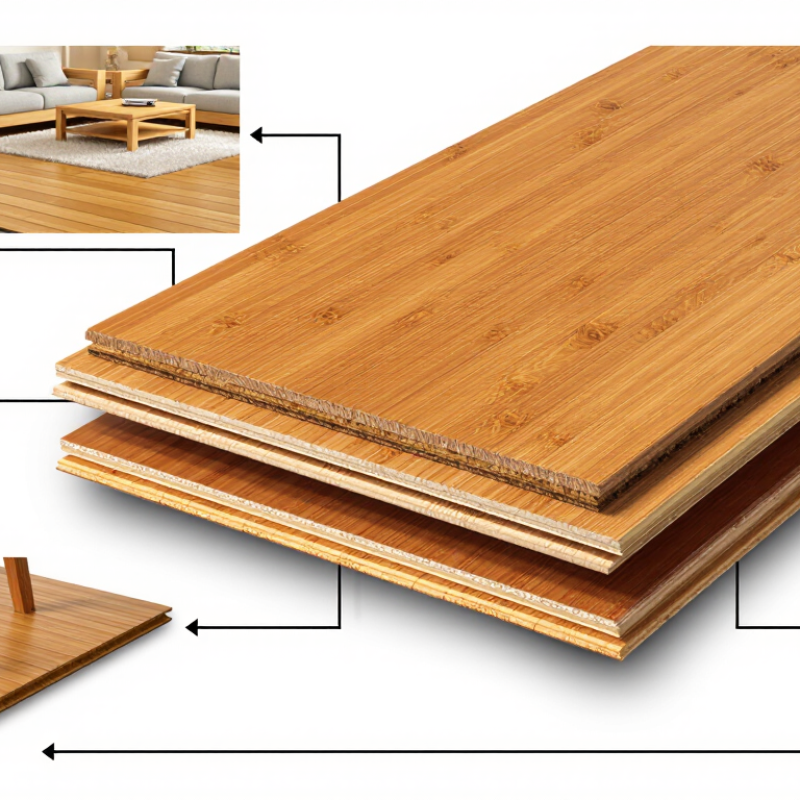
Bamboo plywood flooring is an engineered floor made from laminated bamboo strips or veneers. Manufacturers press several layers together with adhesive, often crossing the grain for stability. A clear wear finish protects the surface from traffic, dust, and minor spills. The result looks like wood, but its internal structure differs.
The material depends heavily on manufacturing quality. Dense, well-pressed layers can resist dents and surface wear. However, bamboo itself is not automatically waterproof or indestructible. The USDA Forest Products Laboratory’s Wood Handbook identifies moisture as a major cause of wood movement, and bamboo flooring faces similar risks. Humidity can make boards expand, while dry indoor air may create small gaps.
Installation matters greatly.
The Food and Agriculture Organization’s Global Forest Resources Assessment 2020 estimated global bamboo forest area at about 35 million hectares. This supports bamboo’s growing role as a renewable material, but resource availability does not prove floor durability. Testing still matters. Look for documented results from abrasion, dimensional stability, and finish-performance testing. I would also inspect the wear layer, edge sealing, and subfloor preparation. In real homes, tracked grit near an entrance may damage finishes faster than ordinary foot traffic. Bamboo plywood flooring can be durable, but its performance depends on density, adhesives, coating, moisture control, and maintenance. That qualification is easy to overlook.
| Data Dimension | Typical Information | What It Means for Flooring | Durability Consideration |
|---|---|---|---|
| Basic Definition | Bamboo plywood is an engineered panel made by bonding multiple layers or strips of bamboo under pressure. | The material has a layered structure rather than being a single solid piece of bamboo. | Cross-layer construction can improve dimensional stability compared with a single-direction material. |
| Common Bamboo Forms | Panels may use horizontal, vertical, or strand-oriented bamboo layers. | Each construction creates a different visual pattern and performance profile. | Strand-oriented products are generally dense, while layered panels provide a plywood-like structure. |
| Typical Thickness | Flooring products commonly use boards or panels approximately 10–20 mm thick, although specifications vary. | Thickness affects stiffness, installation method, and compatibility with the subfloor. | Thicker material can help resist flexing, but correct subfloor preparation remains essential. |
| Surface Finish | Factory-applied finishes may include aluminum oxide, acrylic, or other protective coating systems. | The finish protects the surface from everyday abrasion, stains, and minor moisture exposure. | Wear resistance depends heavily on coating quality, number of finish layers, and maintenance. |
| Hardness | Bamboo flooring hardness varies widely by species, manufacturing process, and product design. Many products fall within a broad range comparable to common hardwood flooring. | Harder flooring is generally more resistant to dents from furniture and foot traffic. | Hardness does not prevent scratching, and excessive hardness may make damaged boards harder to repair invisibly. |
| Dimensional Stability | Bamboo, like wood, expands and contracts as indoor humidity changes. | Expansion gaps and acclimation are important during installation. | Stable indoor humidity and correct installation reduce cupping, gaps, and joint movement. |
| Moisture Resistance | Bamboo plywood is not inherently waterproof. Exposed edges, joints, and unfinished surfaces can absorb moisture. | It is better suited to dry interior rooms than areas with frequent standing water. | Bathrooms, laundry rooms, and below-grade spaces require product-specific approval and careful moisture control. |
| Load Performance | Engineered bamboo panels can provide good stiffness when properly supported by a level, structurally sound subfloor. | The flooring can perform well in residential rooms and many light commercial settings. | Heavy concentrated loads, uneven subfloors, and inadequate support can cause deflection or joint damage. |
| Scratch and Dent Resistance | Resistance depends on the bamboo density, surface finish, furniture weight, footwear, and traffic level. | Daily use can gradually create scuffs, scratches, or dents even on hard flooring. | Felt pads, entrance mats, and prompt removal of grit help extend the service life. |
| Installation Methods | Depending on the product, installation may be floating, glue-down, or nail-down. | The selected method must match the flooring construction and subfloor type. | Following the manufacturer’s installation requirements helps prevent movement, squeaks, and premature failure. |
| Maintenance Requirements | Routine care usually includes sweeping or vacuuming with a floor-safe attachment and cleaning with a lightly dampened cloth or mop. | Removing sand and grit limits abrasive wear on the finish. | Excess water, steam cleaning, wax, and harsh chemicals may damage the finish or cause swelling. |
| Repairability | Minor surface marks may be addressed with approved repair products, while severely damaged boards may need replacement. | Repair options depend on the finish, wear layer, installation method, and spare material available. | Keeping extra boards from the original installation can make future repairs easier. |
| Expected Service Life | A well-made and properly installed bamboo floor can provide many years of service, but there is no universal lifespan. | Performance varies according to traffic, moisture, finish quality, and maintenance. | Product warranties and technical specifications are more reliable than a general lifespan estimate. |
| Environmental Characteristics | Bamboo is a rapidly renewable grass, but environmental performance also depends on adhesives, finishes, transport, and manufacturing practices. | The material can be a resource-efficient flooring option when responsibly produced. | Look for information about formaldehyde emissions, responsible sourcing, and relevant product certifications. |
| Overall Durability Assessment | Bamboo plywood flooring can be durable for dry indoor areas when its construction, finish, and installation are appropriate. | It offers a hard, engineered surface with a distinctive bamboo appearance. | Its main vulnerabilities are excessive moisture, abrasive dirt, poor installation, and uncontrolled humidity. |
Note: Exact performance depends on the product’s bamboo species, density, adhesive system, finish, thickness, and installation instructions. Always verify technical data before selecting flooring for a specific room.