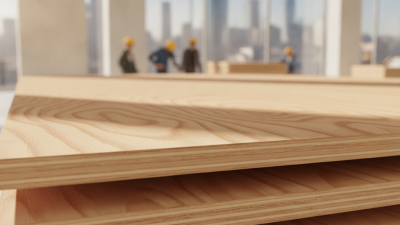
China has become a major sourcing base for laminated wood panels, including Laminated Birch Plywood. Manufacturers serve furniture, cabinetry, interior fitting, and transport applications. Their products may differ greatly in veneer quality, core construction, adhesive selection, and finishing accuracy.
This guide examines Chinese manufacturers and their price ranges through practical purchasing factors. It considers birch veneer grades, panel thickness, formaldehyde performance, moisture resistance, surface sanding, and production consistency. A well-made sheet should show even layers, tight edges, and a clean, stable face. These details matter.
Prices usually depend on order volume, specifications, certification, packaging, and delivery terms. A factory quote may appear attractive, yet additional inspection, freight, or protective wrapping can change the final cost. That matters. Buyers should request recent samples, technical data sheets, test reports, and clear tolerances before comparing offers.
Factory experience is also important. Reliable suppliers can explain pressing temperatures, adhesive systems, calibration methods, and quality-control checkpoints. They should answer specific questions without hiding behind general claims. Still, no supplier is perfect. Some published specifications may be incomplete or outdated. That limitation deserves attention.
The following overview is designed to support a balanced evaluation of China’s top Laminated Birch Plywood manufacturers. It combines market knowledge with practical sourcing observations. Readers should verify current prices directly, because timber costs, exchange rates, energy expenses, and shipping conditions change frequently. A careful comparison can reduce surprises and reveal better long-term value.
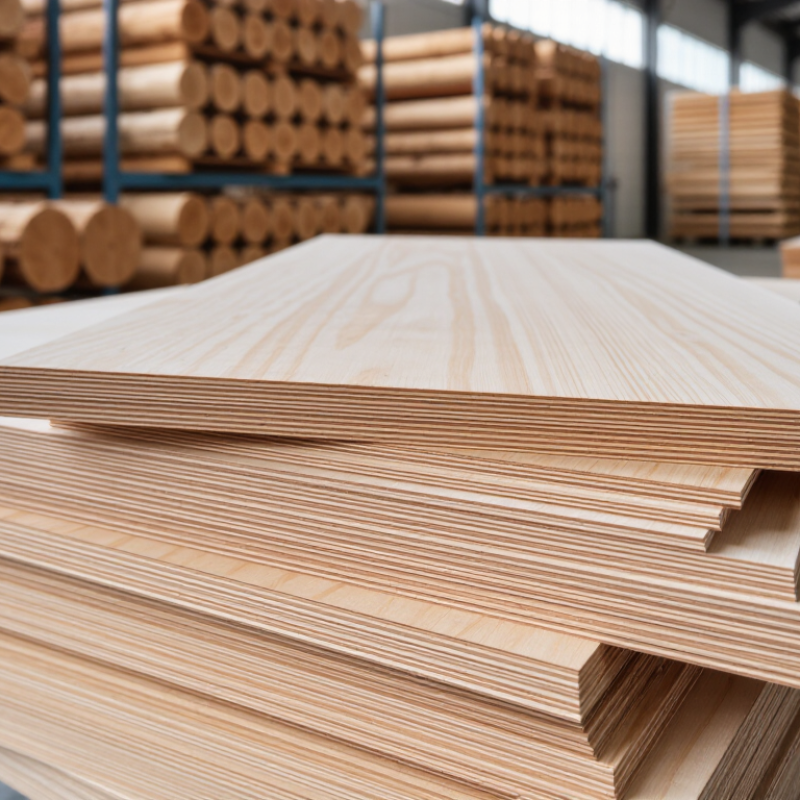
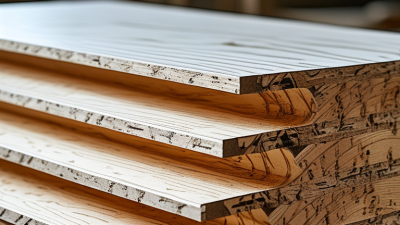
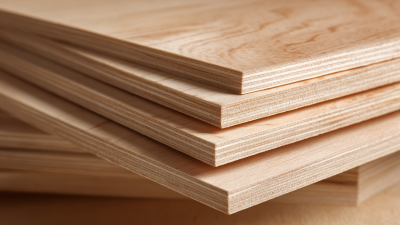
Laminated birch plywood is a layered panel made from thin birch veneers. Each veneer is peeled from logs, dried, graded, and arranged with alternating grain directions. This cross-layer structure improves stability and helps resist bending. The surface is then covered with a durable laminate, film, or decorative sheet.
Manufacturing begins with careful veneer selection. Workers remove loose knots, repair small defects, and control moisture before gluing. Adhesive is spread evenly between the layers. A hot press applies heat and pressure, bonding the panel into a dense sheet. After pressing, the board is cooled, trimmed, sanded, and checked for thickness, bonding strength, and surface flatness. Factory inspectors often measure several points because one corner can hide a problem.
China has many plywood producers serving furniture, transport, and interior construction markets. Prices change with thickness, grade, core structure, surface finish, order volume, and inspection requirements. A low quotation may reflect more repairs, thinner laminate, or weaker edge treatment. That is easy to overlook. Buyers should request test data, moisture information, emission documentation, and clear tolerance limits. Samples also matter; a smooth face may still conceal uneven layers inside. In practical use, laminated birch plywood feels rigid under load and machines cleanly, but it is not flawless. Poor storage can cause swelling, and careless cutting may expose the inner veneers.
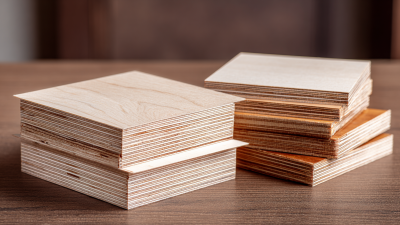
Laminated birch plywood combines a dense birch core with a durable surface layer. The USDA Forest Products Laboratory’s Wood Handbook, FPL-GTR-282, describes birch as a strong hardwood with relatively high density. This structure supports clean machining, stable screw holding, and smooth painted finishes. Many panels use cross-laminated veneers, which reduce warping across changing humidity. The surface can also resist light abrasion, although it is not automatically waterproof. That distinction matters.
Typical applications include cabinet doors, retail fixtures, laboratory furniture, worktops, vehicle interiors, and decorative wall panels. The European Panel Federation reports that engineered wood products remain important in furniture and interior construction markets. However, performance depends on adhesive class, veneer quality, panel thickness, and edge sealing. A 12-millimeter panel may suit a drawer side, but a loaded shelf often needs thicker material or additional support. Prices vary with grade, face quality, thickness, certification, and order volume. Comparing price per sheet alone can create a false saving.
Tips: Check the technical datasheet before purchasing. Confirm formaldehyde class, bonding grade, moisture resistance, and tolerances. Inspect the face for patches, open joints, and sanding marks. Store sheets flat on spacers, away from direct rain. Leave acclimation time before installation. I have found that careful edge sealing prevents more failures than expensive surface treatments. Still, no plywood remains perfectly stable in a poorly ventilated room. That limitation deserves honest attention.
The chart compares typical laminated birch plywood thicknesses with approximate panel weight and indicative wholesale pricing. Weight is estimated using a birch plywood density of about 680 kg/m³. Actual prices vary according to laminate type, surface grade, bonding standard, panel size, order volume, and export destination.
Common applications include furniture components, interior wall panels, cabinetry, vehicle and trailer interiors, flooring systems, workshop surfaces, and durable formwork.
China has become a major sourcing base for laminated birch plywood. Leading manufacturers usually combine stable birch veneers, controlled pressing, and experienced quality teams. Their factories may produce panels for furniture, interiors, vehicles, and demanding construction applications.
Reliable manufacturers provide clear information about veneer grades, adhesive types, panel thickness, surface films, and formaldehyde performance. They should also explain moisture content and tolerance ranges. A professional supplier can share production photos, test reports, and pre-shipment inspection records. Prices depend on core quality, laminate design, order volume, packaging, and delivery terms. A low quote is not always a bargain. Thin veneers or uneven pressing may create visible edges, bubbles, or warping after installation. That detail deserves attention.
Tips: Request a small sample first. Check its flatness, edge bonding, surface uniformity, and actual thickness. Ask whether the quoted price includes export packaging and inspection. Compare complete specifications, not only the unit price. Keep communication written, because small details can change the final cost. One issue remains easy to overlook: sample quality may exceed mass-production quality. An independent inspection can reduce that risk.
China Top Laminated Birch Plywood Manufacturers and Prices
For buyers, laminated birch plywood should be judged by evidence, not surface appearance. FAO’s Global Forest Resources Assessment 2020 reports that forests cover about 31% of global land area. Responsible sourcing therefore matters, especially when suppliers claim certified timber. Request species details, origin records, veneer thickness, and batch traceability. A pale, smooth face is attractive. It does not prove strong bonding.
Check the required performance class before comparing prices. EN 314-2 classifies bonding quality for dry, humid, and exterior conditions, while EN 636 defines plywood use by service environment. For the United States, TSCA Title VI sets a 0.05 ppm formaldehyde emission limit for hardwood plywood. Ask for recent laboratory reports, not only certificates printed on a quotation. FAO’s Forestry Production and Trade database is also useful for reviewing plywood market volumes and trade trends. Prices vary with panel thickness, core quality, film type, machining, packaging, and order quantity. A cheaper panel may create more waste during cutting. That part is easy to underestimate.
Tips: Compare three samples from different batches. Measure thickness at several points. Inspect edge gaps, face bubbling, glue lines, and warping under side lighting. Confirm moisture content and testing standards in writing. Also check whether the report matches the exact product code. It sounds cautious, but documents can describe a better grade than the shipment. (Sources: FAO FRA 2020; FAO Forestry Production and Trade Database; EN 314-2; EN 636; U.S. EPA TSCA Title VI.)
| Product Category | Common Thickness | Typical Face and Core Configuration | Recommended Application | Relevant Quality Standard or Test | Buyer Selection Criteria | Indicative Export Price Range |
|---|---|---|---|---|---|---|
| Standard Laminated Birch Plywood | 6–18 mm | Birch veneer faces and cross-banded birch veneer core; smooth phenolic or melamine-based laminated surface | Furniture panels, shelving, cabinetry, interior fittings and general fabrication | EN 636 for plywood performance; EN 314-2 Class 1 or Class 2 bonding depending on moisture exposure | Check panel thickness tolerance, veneer overlap, surface smoothness, edge squareness and absence of open joints | US$650–950/m³ |
| Interior Furniture-Grade Laminated Birch Plywood | 12–25 mm | High-quality birch face veneer with balanced multi-ply construction and low visual defect level | High-end furniture, visible cabinet parts, doors, desks and decorative wall panels | EN 635 face-appearance classification; formaldehyde testing under EN 717-1 or applicable local regulation | Request face-grade samples, color consistency, calibrated sanding, core-gap inspection and batch-to-batch color control | US$800–1,200/m³ |
| Moisture-Resistant Laminated Birch Plywood | 9–30 mm | Birch veneers bonded with weather-resistant adhesive and protected by a durable laminate film | Kitchens, bathrooms, commercial interiors and areas subject to intermittent humidity | EN 314-2 Class 2 bonding; EN 636-2 for humid-service applications where applicable | Confirm glue-line integrity after water exposure, surface-seal performance, edge-sealing requirements and thickness swelling data | US$850–1,300/m³ |
| Exterior-Grade Laminated Birch Plywood | 9–30 mm | Birch veneer panels using exterior-grade adhesive and a weather-resistant phenolic or equivalent film surface | Outdoor furniture, transport components, site structures and covered exterior applications | EN 314-2 Class 3 bonding; EN 636-3 for exterior-service classification where applicable | Verify boil-water or cyclic-moisture test results, film weight, edge protection, UV limitations and maintenance requirements | US$950–1,500/m³ |
| High-Wear Film-Faced Birch Plywood | 12–27 mm | Birch plywood with textured, slip-resistant or high-abrasion phenolic film on one or both faces | Truck floors, loading platforms, stair treads, industrial flooring and reusable formwork | EN 13986 for wood-based panels in construction; abrasion, slip-resistance and bonding tests specified by the project | Compare film grammage, surface texture, abrasion resistance, bending strength, screw-holding performance and edge sealing | US$1,050–1,650/m³ |
| Structural Laminated Birch Plywood | 18–30 mm | Balanced cross-laminated veneer construction with structural-grade face and core veneers | Load-bearing panels, transport platforms, temporary structures and engineered assemblies | EN 636 structural classification; EN 13986 documentation; project-specific bending and shear performance data | Require declared bending strength, modulus of elasticity, density, panel flatness and production-batch traceability | US$900–1,400/m³ |
| Low-Formaldehyde Laminated Birch Plywood | 6–25 mm | Birch plywood manufactured with low-emission adhesive and a sealed decorative or protective laminate | Schools, offices, residential interiors, healthcare interiors and environmentally controlled buildings | EPA TSCA Title VI or CARB Phase 2 for applicable markets; EN 717-1 for formaldehyde emission testing | Ask for a current third-party emission report, production date, panel identification and test-method details | US$750–1,250/m³ |
| Custom-Cut Laminated Birch Plywood | Customer-specified | Standard laminated plywood cut, drilled, routed or CNC-machined to approved drawings | Furniture components, prefabricated assemblies, vehicle interiors and project-based manufacturing | Dimensional inspection against approved drawings; applicable plywood and emission standards remain unchanged | Confirm CAD revision control, cutting tolerance, minimum order quantity, packaging method and replacement policy | US$1,000–1,900/m³ |
| Common Sheet Dimensions | Typical thickness tolerance: approximately ±0.2–0.5 mm, subject to specification | Common formats include 1,220 × 2,440 mm and 1,250 × 2,500 mm; other sizes may be produced to order | Choose dimensions that minimize cutting waste and simplify container loading | Verify dimensional tolerances against the purchase specification and the selected standard | Request a pre-production sample, approved technical data sheet and independent dimensional inspection for large orders | Usually included in the product quotation |
| Supplier Documentation Package | Not applicable | Technical data sheet, certificate of analysis, formaldehyde report, bonding classification and packing list | Import clearance, project approval, quality audits and after-sales claims | Documents should identify the test method, laboratory, sample description, test date and production batch | Prefer suppliers that provide traceability, consistent inspection records, corrective-action procedures and retained samples | Normally included; third-party inspection may add US$250–600 per inspection |
| Price guidance: The ranges above are indicative export-level estimates for laminated birch plywood and may vary according to thickness, face grade, adhesive system, film type, order volume, machining, packaging, freight terms, certification and destination. Buyers should obtain a current quotation and verify compliance with the regulations of the importing market before placing an order. | ||||||
Laminated Birch Plywood Prices and Cost Influencing Factors
China remains a major plywood manufacturing base, supported by extensive panel-processing capacity and export infrastructure. The FAO Forestry Production and Trade database identifies China as a leading global plywood producer. Recent ITC Trade Map records for HS 441233 show wide export-value differences across plywood shipments. Standard laminated birch plywood commonly quotes around 650–1,100 US dollars per cubic metre FOB China. Premium grades may exceed 1,300 dollars. These figures are indicative, not fixed offers. Thickness matters. A 6-millimetre panel uses different processing and packaging than an 18-millimetre panel.
Birch veneer quality strongly influences the final price. Clear faces, low core gaps, consistent layers, and calibrated sanding require tighter production control. Phenolic or melamine film adds material and pressing costs. Film weight, colour, surface texture, and edge sealing also change the quotation. The USDA Foreign Agricultural Service regularly reports fluctuations in Chinese timber imports and domestic panel demand. Birch log availability can therefore move prices quickly. Freight, pallet design, moisture protection, and inspection requirements add further costs. In procurement checks, I compare prices per cubic metre, not per sheet. That avoids misleading comparisons. A low quote may hide thinner panels or lower face grades. This is where buyers should pause. Public trade data can show market direction, but it cannot replace factory inspection, recent test reports, and a clearly written specification.