MDF Pre Laminated Board Best Uses and Advantages Explained?
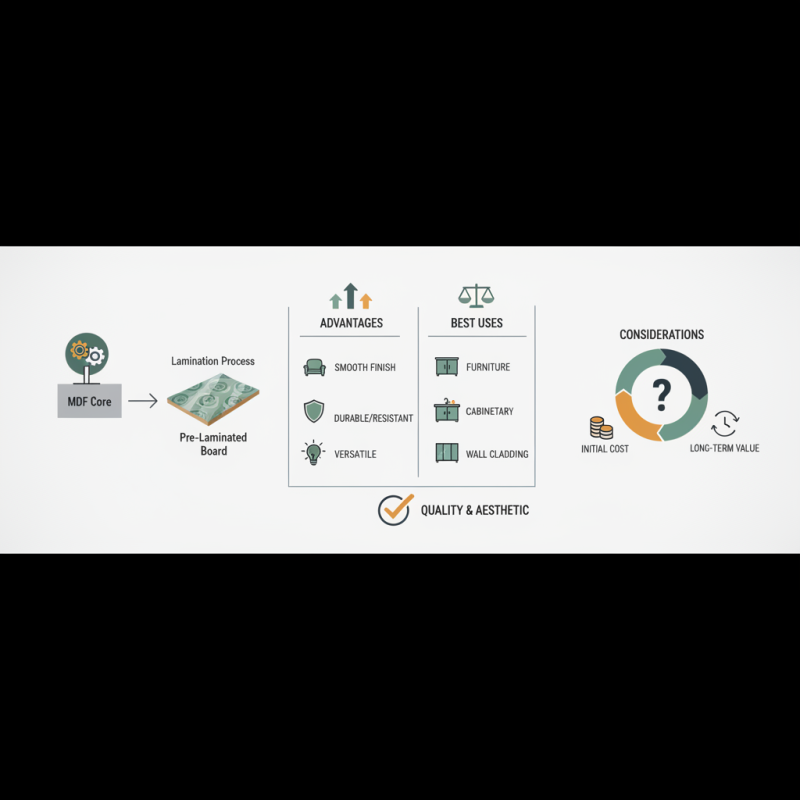
MDF Pre Laminated Board has gained popularity in modern interior design. This versatile material offers numerous advantages, making it a favored choice for various applications. With its smooth surface and attractive finish, MDF Pre Laminated Board excels in creating beautiful furniture and cabinetry.
Crafted from medium-density fiberboard, it is lightweight yet sturdy. The laminated coating enhances durability, making it resistant to wear and tear. This characteristic is particularly useful in high-traffic areas. However, not all projects benefit equally from these boards.
Some might find the cost slightly higher than traditional plywood. It's essential to weigh the long-term advantages against the initial investment. This careful consideration ensures you make the right choice for your projects. Overall, MDF Pre Laminated Board remains a top pick for those seeking quality and aesthetic appeal in their interior spaces.
MDF Pre Laminated Board: An Overview of Its Composition and Features
MDF pre-laminated boards are gaining traction in various applications. They offer a balance of affordability and durability. The board consists of a medium-density fiberboard core, which is then laminated with a decorative surface. This combination provides both strength and aesthetic appeal.
According to industry reports, MDF pre-laminated boards have a thickness ranging from 6mm to 25mm. This versatility makes them suitable for furniture, cabinetry, and interior applications. The laminate surface is resistant to scratches and moisture, which enhances longevity. However, the quality of the laminate can vary. Cheaper options may not hold up as well over time.
Additionally, these boards can be easy to work with but can be prone to chipping when cut improperly. The environmental impact of MDF is also a consideration. Many manufacturers are moving towards sustainable practices, but not all adhere to these standards. It's essential to choose products that prioritize eco-friendly materials. Despite some drawbacks, MDF pre-laminated boards remain a popular choice for those looking for stylish yet functional solutions.
Top Applications for MDF Pre Laminated Boards in Interior Design
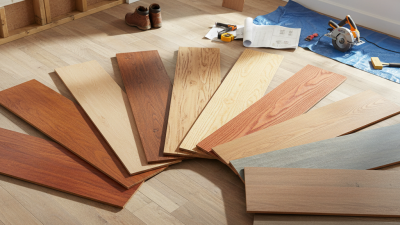
MDF pre laminated boards are increasingly popular in interior design. Their versatility makes them ideal for various applications. These boards provide a smooth finish, which is essential for a polished look. They come in many colors and textures, blending easily with diverse styles.
In kitchens, MDF pre laminated boards can form cabinet doors and countertops. They resist moisture and wear well over time. However, seams can sometimes be noticeable if not installed correctly. In living rooms, these boards work well for wall paneling or built-in shelves, offering a modern aesthetic. Many homeowners love the durability, but color fading can be an issue under direct sunlight.
For offices, MDF pre laminated boards are used for desks and partitions. They help create an organized and sleek workspace. Yet, scratches may appear if the surface is not treated properly. In children's rooms, these boards can be transformed into fun furniture pieces. The limitations are evident when considering heavy impacts could cause chips. Balancing beauty and practicality is key when choosing the right application for MDF boards.
MDF Pre Laminated Board Best Uses and Advantages
This chart illustrates the top applications for MDF pre laminated boards in interior design, highlighting their most common uses and the advantages associated with each use case.
Benefits of Using MDF Pre Laminated Boards for Furniture Manufacturing
MDF pre laminated boards are gaining popularity in furniture manufacturing for several reasons. They provide a smooth, ready-to-use surface, which cuts down on finishing time. This efficiency is appealing for manufacturers aiming for quick turnarounds. The boards come in various colors and patterns, allowing for versatile design choices. They are lightweight yet sturdy, making them easy to handle during assembly.
Using MDF pre laminated boards has its challenges. While they are cost-effective, they can be susceptible to moisture damage. Care must be taken in environments with high humidity. Additionally, the boards may not be as durable as solid wood options. This raises concerns about longevity in high-use items. Manufacturers must evaluate their specific needs carefully.
Incorporating MDF pre laminated boards can streamline production. However, the risk of scratches on the surface can be an issue. Customers expect flawless finishes. Failing to meet these expectations could lead to dissatisfaction. Thus, while these boards are convenient, a thoughtful approach to their application is necessary.
Comparing MDF Pre Laminated Boards with Other Types of Laminated Boards
When comparing MDF pre-laminated boards with other types, differences emerge clearly. MDF boards are known for their smooth surface, which allows for easy painting and finishing. In contrast, particleboard or plywood may not offer the same level of smoothness. This can impact the final look of your project. Also, MDF boards are denser, which makes them more robust. They resist warping better than some alternatives.
Tips: Consider the intended use of the board. For cabinetry, MDF’s stability is a plus. If you’re making shelves, however, you might weigh the load-bearing limits of each type.
Durability is another point of consideration. MDF pre-laminated boards boast good resistance to moisture, but they are not waterproof. Plywood can outperform MDF in wet conditions. It might be crucial to choose wisely based on your environment. Real-life projects reveal that improper choice can result in failures.
Tips: Always test a small piece in your setting. This way, you can observe how the material reacts to your specific conditions. The best choice often depends on your needs, surroundings, and budget. Don’t forget to consider the finishing process, as some materials take better to paints or stains than others.
MDF Pre Laminated Board Best Uses and Advantages Explained? - Comparing MDF Pre Laminated Boards with Other Types of Laminated Boards
| Board Type |
Material Composition |
Best Uses |
Advantages |
Disadvantages |
| MDF Pre Laminated Board |
Medium Density Fiberboard with laminate finish |
Furniture, cabinetry, wall panels |
Smooth finish, versatile design, cost-effective |
Sensitive to moisture, can chip easily |
| Plywood |
Layered wood veneer |
Structural applications, flooring |
Strong, durable, water-resistant options |
Uneven surface compared to MDF |
| Particle Board |
Wood particles bonded with adhesive |
Low-cost furniture, shelves |
Inexpensive, lightweight |
Less durable, prone to sagging |
| HDF (High Density Fiberboard) |
High-density fiberboard with laminate |
Flooring, decorative panels |
Very smooth surface, good for printing |
More expensive than MDF, less flexible |
Maintenance Tips for Enhancing the Longevity of MDF Pre Laminated Boards
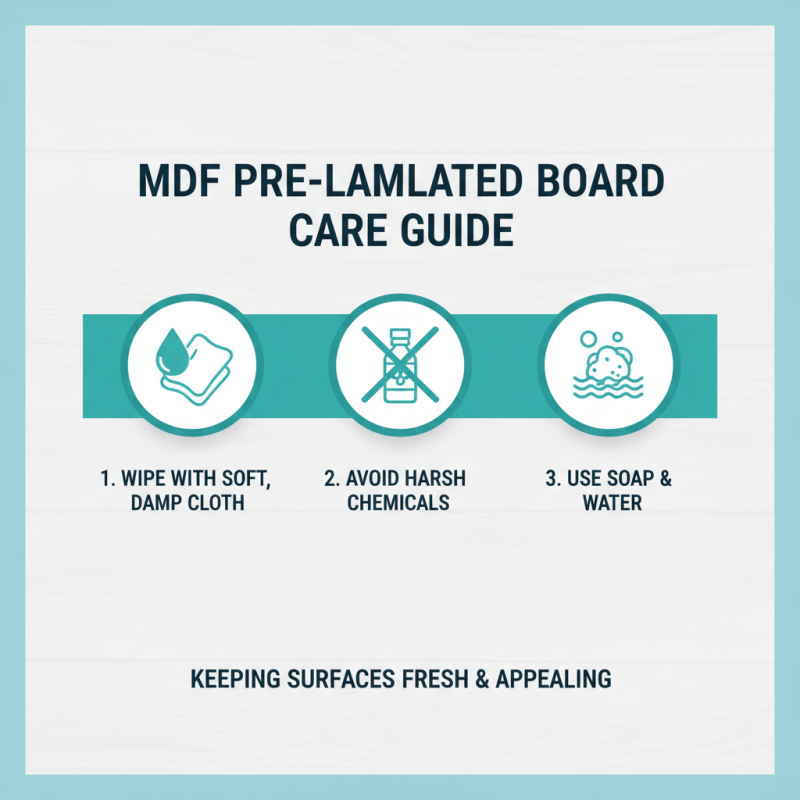
To maintain MDF pre laminated boards effectively, regular cleaning is essential. Use a soft, damp cloth to wipe down surfaces. Avoid using harsh chemicals, as they can damage the laminate. Simple soap and water often do the trick. This practice helps to keep the appearance fresh and appealing.
Humidity and temperature fluctuations can harm MDF boards. Try to keep them in a stable environment. A dehumidifier can help in areas with high moisture levels. Be mindful of direct sunlight, which can fade colors over time. Regular inspection for signs of wear can prevent bigger issues.
When keeping MDF boards, remember to handle them with care. Dropping or hitting them can cause dents or scratches. If chips occur, repair them promptly. A small touch-up can save the board’s integrity. Evaluating how you use the board daily can also enhance its life. Consider using coasters for hot items and avoiding heavy impact. In the long run, simple habits can significantly extend the lifespan of your MDF pre laminated boards.