Best Osb Structural Beams for Your Construction Needs?
When it comes to constructing robust frameworks, selecting the right materials is crucial. Osb Structural Beams have emerged as a popular choice among builders and architects alike. Known for their strength and versatility, these engineered wood products offer stability for various construction projects. Their ability to withstand heavy loads makes them ideal for both residential and commercial applications.
Builders appreciate the economical aspect of using Osb Structural Beams. They provide a reliable, sturdy foundation while being cost-effective compared to traditional lumber. However, not all Osb beams are created equal. It’s essential to choose beams that meet your specific needs and compliance standards. Each project may require different specifications, highlighting the importance of careful selection.
While Osb Structural Beams offer many benefits, they are not without their challenges. Moisture exposure can impact their performance, requiring proper treatment and installation practices. Engaging with knowledgeable suppliers can help mitigate these risks. In this guide, we will explore the best options available, helping you make informed decisions for your construction needs.
Understanding OSB: What Is Oriented Strand Board?
Oriented Strand Board, or OSB, is a widely used engineered wood product. It consists of wood strands, wax, and adhesives. These materials are compressed and heated to form strong panels. OSB is known for its structural integrity and versatility. Many builders appreciate its cost-effectiveness and availability.
When considering OSB, it's essential to understand its properties. The board is moisture-resistant, making it suitable for various climate conditions. However, it may swell when exposed to prolonged moisture. This characteristic requires careful planning in construction. Engineers often recommend using OSB in areas protected from excessive water.
OSB’s manufacturing process gives it a unique performance advantage. Strands are laid in different orientations, enhancing strength and durability. Yet, OSB may not be suitable for all applications. For instance, some may prefer plywood for specific aesthetic needs. Understanding these differences can lead to better choices in construction projects.
Key Advantages of Using OSB Beams in Construction Projects
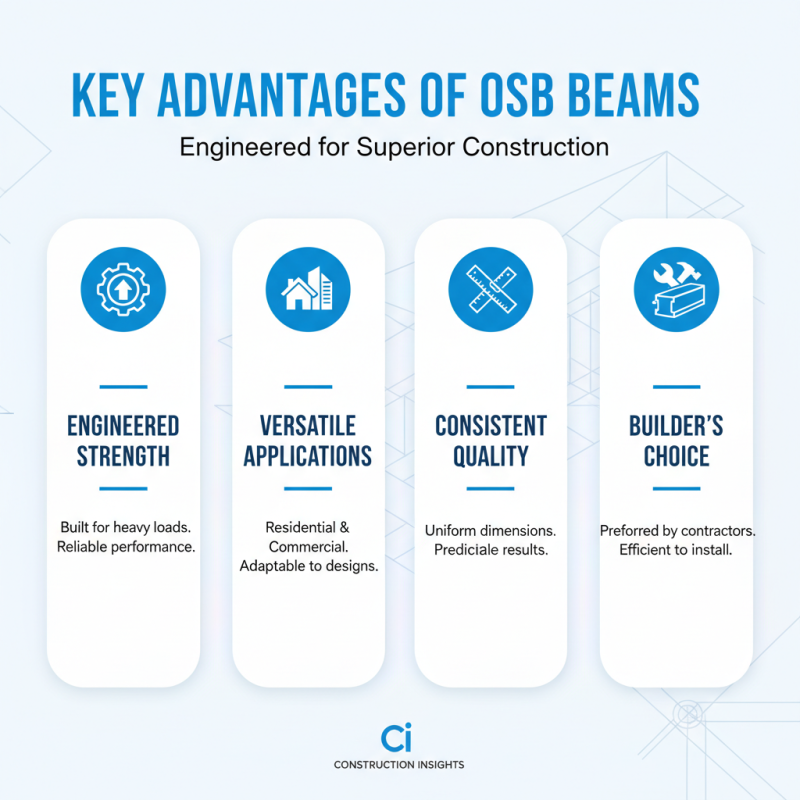
When it comes to construction projects, using OSB beams can offer significant advantages. Engineered for strength, these beams are suitable for both residential and commercial applications. Their uniformity provides reliable performance, making them a popular choice among builders. Many contractors appreciate their versatility in various structural designs.
One key benefit of OSB beams is their resistance to warping. Unlike traditional wood, OSB maintains its shape and integrity under different environmental conditions. This stability helps reduce costly repairs over time. Another advantage is their cost-effectiveness. OSB beams are often more affordable than solid wood alternatives, allowing construction teams to stay within budget while achieving quality results.
However, it's important to consider the potential downsides. OSB is sensitive to moisture, which could lead to deterioration if not properly sealed. Additionally, some may find the appearance of OSB less appealing than natural wood. Reflecting on these points helps builders make informed decisions. Balancing aesthetics with performance is crucial in every construction project.
Types of OSB Structural Beams and Their Applications
When it comes to OSB structural beams, there are several types to consider. Oriented strand board (OSB) beams are engineered wood products known for their strength and versatility. Typically, they are used in flooring, roofing, and wall applications. One common type is the laminated strand lumber (LSL), which offers excellent load-bearing capacity. This makes LSL ideal for tall walls and large spans.
Another popular option is the oriented strand board beam, known for its ease of installation and competitive cost. These beams excel in residential projects, especially in framing and bracing. However, they may not perform as well in high-moisture environments. Traditional solid wood beams can outperform OSB in some applications, so it is essential to assess the specific requirements of your project.
While OSB beams serve a variety of uses, their performance can be affected by environmental factors. For example, exposure to moisture can lead to swelling. This swelling may compromise structural integrity. It's crucial to install them in dry, well-ventilated areas to maximize durability. Being aware of these limitations can help in making informed decisions for construction projects.
Factors to Consider When Choosing OSB Beams for Your Needs
When selecting OSB (Oriented Strand Board) beams for construction, consider several essential factors. Structural integrity is paramount. OSB beams are engineered for strength and may outperform traditional lumber in certain applications. According to a study by the Engineered Wood Association, OSB has a higher load-bearing capacity than solid wood in comparable sizes. This can be critical in projects where weight and stress distribution are concerns.
Moisture content should also be on your radar. OSB is susceptible to water damage if not properly sealed. The American Wood Council indicates that moisture exposure can lead to expansion and structural weakening over time. Depending on your climate and the specific project, you may require treated OSB or protective coatings to enhance durability.
Additionally, sourcing plays a role in the decision-making process. Ensure that your materials come from reputable suppliers who practice sustainable forestry. The Forest Stewardship Council (FSC) provides guidelines for responsible sourcing, which can inform your choices. Trusting your supplier is crucial, as subpar materials can compromise the safety and longevity of your construction.
Best OSB Structural Beams for Your Construction Needs
This bar chart illustrates key characteristics of OSB structural beams relevant for construction needs, including beam width, thickness, span length, load capacity, and cost per linear foot. Use this data to make informed decisions when selecting OSB beams for your projects.
Best Practices for Installing OSB Structural Beams in Construction
When installing OSB structural beams, it's essential to consider the environment and equipment. Proper tools can make a significant difference. A circular saw, level, and drill are fundamental. Using a level ensures that beams are straight and true, which affects the overall structure. Additionally, wearing safety gear protects against potential hazards while working.
Before installation, inspect each beam for defects. Look for knots, splits, or warping. These issues can compromise the integrity of your project. If you find a damaged beam, it’s wise to replace it. Proper storage is also crucial, as OSB can absorb moisture. Elevate the beams off the ground to prevent water damage.
During installation, make sure to follow local building codes. Different regions may have specific requirements. Working with a partner can help lift and position beams accurately. While aligning, ensure there is no excessive strain on the beams. This attention to detail may seem tedious, but it's crucial for long-term stability. Missteps can lead to costly repairs down the line, so take your time.