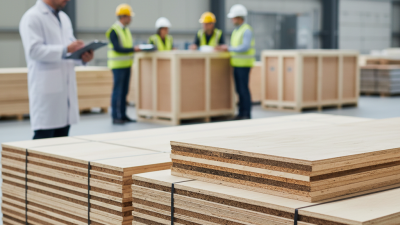
The 2026 market for Melamine Plywood Sheet is becoming more specialized, demanding careful comparison rather than attractive catalog images. Global buyers now evaluate core construction, surface durability, emission ratings, moisture resistance, and supply consistency. A warm oak texture may look excellent in a showroom, yet its edge performance can disappoint in humid interiors.
Wood-coatings specialist Dr. Mark Knaebe offers a practical reminder: “A coating cannot hide a weak substrate.” This principle matters when comparing birch plywood, poplar plywood, hardwood plywood, and fire-retardant panels. Each core creates different results in screw holding, machining, weight, and dimensional stability. Some suppliers also offer matte, high-gloss, embossed, and synchronized-grain surfaces for furniture, kitchens, offices, and retail displays.
No single sheet wins every project.
This guide examines the leading Melamine Plywood Sheet types expected to attract international buyers in 2026. It considers decorative appearance, surface hardness, formaldehyde classification, thickness tolerance, panel balance, and packaging quality. It also highlights practical purchasing questions, including whether the melamine layer covers both faces and whether the exposed edges match the finished surface. Certification claims should be checked against current test reports, not assumed from product labels. That detail is easy to overlook.
Real projects are rarely perfect. Production batches may vary slightly in color, and shipping conditions can affect panel edges. Buyers should request samples, inspect cut sections, and confirm technical data before placing large orders. A thoughtful specification usually prevents expensive surprises.
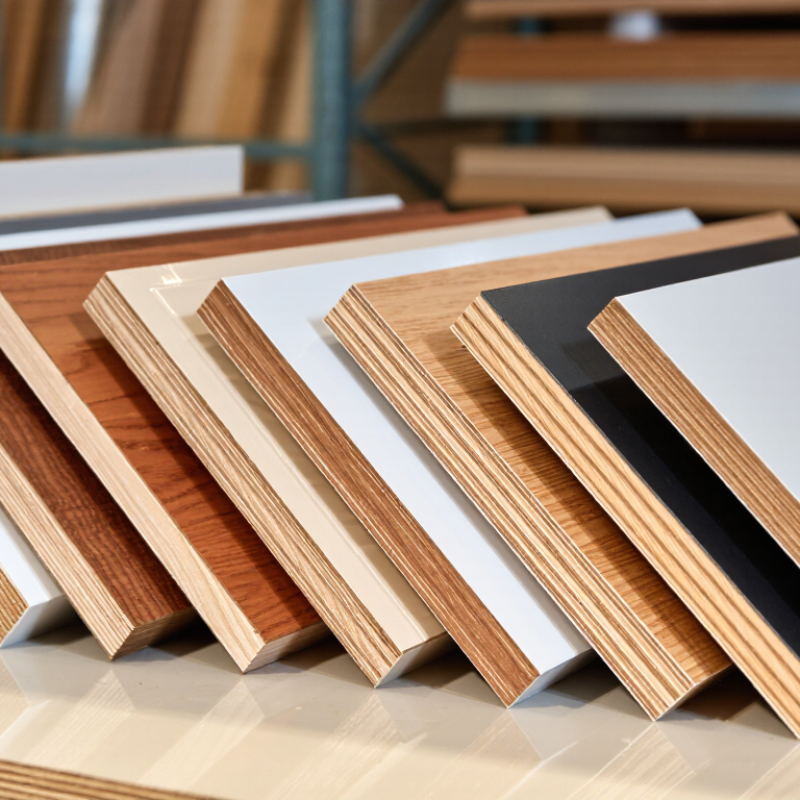
Melamine plywood sheets usually range from 3 to 25 mm, but thickness alone does not define quality. Thin 3 mm panels suit cabinet backs and drawer bases. Medium 6–12 mm sheets work well for doors and interior partitions. Thicker 15–25 mm panels provide stronger shelves and worktops. Core selection matters more. Poplar cores are light and economical. Birch cores offer better screw holding and stiffness. Eucalyptus and mixed hardwood cores can deliver higher density, but their surface uniformity varies.
Core grades are not fully standardized worldwide. Buyers should request clear definitions, such as A/B face quality, void limits, veneer thickness, and moisture content. The FAO Forestry Production and Trade Yearbook 2023 tracks plywood as a major global panel category, yet it does not harmonize melamine core grades. That gap deserves attention. A supplier’s internal grade may not match another supplier’s grade.
For formaldehyde control, E1 means emissions no higher than 0.124 mg/m³ under the EN 717-1 chamber method. Testing uses controlled conditions, commonly 23°C and 50% relative humidity. EN 13986 connects this classification with wood-based panel compliance in construction applications. Ask for a recent accredited laboratory report, not only a printed E1 claim. Edge sealing, laminate coverage, adhesive formulation, and storage climate can influence results. The label is useful, but not perfect. A 25 mm panel may pass E1 while showing weak bonding or excessive core voids. Check the details.
| Sheet Type | Typical Thickness | Core Material | Common Core Grade | Typical Density | Melamine Surface Options | Recommended Applications | Formaldehyde Classification |
|---|---|---|---|---|---|---|---|
| Poplar-Core Melamine Plywood | 3, 5, 9, 12, 15, 18, 21, 25 mm | Multi-layer poplar veneer | MR E1 | 450–550 kg/m³ | Solid colors, woodgrain, matte, and textured finishes | Cabinet doors, wardrobes, shelving, wall panels, and lightweight furniture | E1: ≤0.124 mg/m³ |
| Eucalyptus-Core Melamine Plywood | 5, 9, 12, 15, 18, 21, 25 mm | Hardwood eucalyptus veneer | MR E1 | 550–700 kg/m³ | High-pressure melamine paper with synchronized woodgrain or embossed texture | High-use furniture components, worktops, shelving, and commercial interiors | E1: ≤0.124 mg/m³ |
| Birch-Core Melamine Plywood | 6, 9, 12, 15, 18, 21, 24 mm | Cross-banded birch veneer | MR E1 | 620–700 kg/m³ | Decorative melamine face with optional matching reverse side | Precision furniture, drawers, fixtures, desks, and visible edge applications | E1: ≤0.124 mg/m³ |
| Combi-Core Melamine Plywood | 9, 12, 15, 18, 21, 25 mm | Poplar and hardwood veneer combination | MR E1 | 500–620 kg/m³ | Plain, woodgrain, stone-look, and fabric-look decorative papers | General furniture, retail fixtures, office interiors, and project joinery | E1: ≤0.124 mg/m³ |
| Hardwood-Core Melamine Plywood | 9, 12, 15, 18, 21, 25 mm | Mixed hardwood veneer | MR E1 | 600–750 kg/m³ | Wear-resistant melamine surface in smooth or embossed texture | Heavy-duty shelving, kitchen carcasses, counters, and high-traffic interiors | E1: ≤0.124 mg/m³ |
| Film-Faced Decorative Melamine Plywood | 12, 15, 18, 21, 25 mm | Hardwood or eucalyptus veneer core | MR E1 | 550–700 kg/m³ | Dense decorative overlay designed for improved scratch and stain resistance | Retail counters, laboratory furniture, school furniture, and public-use interiors | E1: ≤0.124 mg/m³ |
| Moisture-Resistant Melamine Plywood | 9, 12, 15, 18, 21, 25 mm | Poplar, combi, eucalyptus, or hardwood veneer core | MR E1 | 500–700 kg/m³ | Melamine face with sealed edges recommended for humid environments | Bathrooms, laundry areas, kitchens, utility rooms, and sheltered commercial spaces | E1: ≤0.124 mg/m³ |
| Lightweight Melamine Plywood | 9, 12, 15, 18, 21 mm | Low-density poplar or paulownia-based veneer core | MR E1 | 350–500 kg/m³ | Light-colored decorative papers and thin textured finishes | Mobile furniture, caravan interiors, doors, partitions, and transport fit-outs | E1: ≤0.124 mg/m³ |
| Structural-Grade Melamine Plywood | 12, 15, 18, 21, 25 mm | Selected hardwood or birch veneer with controlled lay-up | MR E1 | 600–720 kg/m³ | Durable melamine surface applied to one or both sides | Load-bearing shelving, workbenches, platforms, shopfitting, and robust cabinetry | E1: ≤0.124 mg/m³ |
| Buyer note: Thickness availability, density, veneer construction, surface wear rating, moisture resistance, and emission results vary by manufacturer and production batch. Confirm the technical datasheet and test method before placing an international order. The E1 value shown is the chamber-test limit commonly referenced under EN 717-1; local regulations and project specifications may require additional documentation. | |||||||
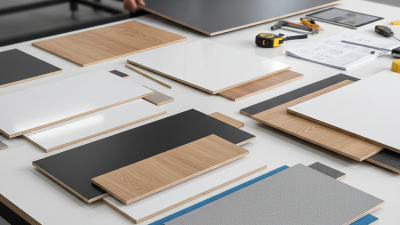
Melamine plywood buyers are specifying thinner decorative papers more carefully in 2026. A 60–120 g/m² paper usually balances appearance, resin uptake, and surface cost. Lower weights can reveal veneer joints or sanding marks. Higher weights provide stronger visual coverage, but may need better resin distribution and longer pressing control.
Industrial trials commonly use 150–220°C pressing temperatures. The correct setting depends on resin chemistry, board moisture, paper weight, and press time. Excessive heat can cause blisters, gloss variation, or brittle edges. Insufficient heat may leave incomplete curing and weak bonding. A practical factory check includes moisture testing, caliper measurement, and cross-cut adhesion after conditioning.
The 2024 Grand View Research assessment places the global decorative laminates market in the multi-billion-dollar range, with mid-single-digit annual growth projected through the decade. Recent market reviews from Research and Markets also identify furniture and interior panels as major demand areas. These figures support continued demand, but they do not replace production trials. Real panels behave differently. Small temperature changes matter.
One overlooked issue is paper storage. Humidity can change sheet dimensions before pressing. Buyers should request technical data, batch records, and performance samples. A 180°C cycle may look efficient, yet a 160°C cycle could protect color better on a moisture-sensitive core. Verify, do not assume.
Melamine-faced plywood is gaining attention as global buyers seek cleaner surfaces and dependable moisture performance. FAO’s 2023 forest-products statistics place worldwide wood-based panel production at approximately 400 million cubic metres annually, showing the scale of this supply chain. Yet surface appearance can mislead. A melamine layer improves stain resistance and routine cleaning, but it does not automatically make the plywood waterproof.
MR plywood suits dry interiors, such as wardrobes, office partitions, and bedroom furniture. HMR plywood offers stronger resistance to short-term humidity and occasional splashes. However, HMR remains a market description, not one universal performance class. Ask for swelling data, bond strength results, and formaldehyde test documentation. The label alone is insufficient.
EN 636 provides a clearer purchasing framework. EN 636-1 covers dry conditions, EN 636-2 addresses humid conditions, and EN 636-3 is intended for exterior exposure. These classes should match the panel’s service environment, not merely the project’s location. A kitchen cabinet beside a sink may need more protection than a bedroom cabinet in the same building. The EN 636 classification should be supported by test reports referencing relevant European methods, including bending strength and thickness swelling. Small detail. Big consequence.
Data from the FAO and UNECE Forest Products Annual Market Review also shows how strongly construction and furniture demand influence panel markets. Buyers should therefore compare core veneer quality, edge sealing, surface durability, and storage conditions. One practical weakness remains: many suppliers use “HMR” inconsistently. Careful specifications prevent expensive assumptions.
Moisture-Resistant Types: MR, HMR, and EN 636 Use Classes
EN 636 class 1 is intended for dry conditions, class 2 for humid conditions, and class 3 for exterior conditions. MR and HMR are commonly used market terms; their actual performance should be confirmed through the manufacturer’s technical datasheet and the declared EN 636 classification.
Reference: EN 636 — Plywood: Specifications, performance and requirements.
2026 Top Melamine Plywood Sheet Types for Global Buyers
Fire-performance melamine plywood requires more than a decorative surface. Buyers should examine the complete panel construction, including the wood core, resin layer, thickness, joints, and installation method. Euroclass B-s1,d0 indicates limited fire contribution, low smoke production, and no flaming droplets during the relevant test. It is a demanding classification for interior wall and ceiling applications. However, ASTM E84 uses flame-spread and smoke-developed indexes to classify surface-burning behavior. Its Class A, B, or C result is not directly equivalent to Euroclass B-s1,d0.
A rating alone is not enough. In project reviews, I have seen buyers compare certificates without checking the tested thickness or substrate. That can create costly assumptions. Ask for a current test report, declared product structure, production batch details, and installation limitations. Confirm whether the report covers the finished melamine plywood, not only an untreated core. Small details matter.
Tips: Match the certificate to the actual panel. Check thickness, surface finish, adhesive, and fixing system. Request independent laboratory evidence when documents appear incomplete. Fire performance can change after cutting, edge exposure, or ventilation gaps. I once underestimated the effect of open joints. It was a useful correction. Local building approval may also require an assembly-level assessment, so consult a qualified fire engineer before final specification.
2026 Top Melamine Plywood Sheet Types for Global Buyers
Melamine-faced plywood remains popular for cabinets, shelving, worktops, and interior wall panels. Core options include birch, poplar, hardwood, and mixed-species plywood. The visible surface matters, but compliance starts inside the sheet. FSC and PEFC documentation can support responsible forest sourcing. Buyers should check the certificate scope, chain of custody, and product invoice details. A logo alone proves little.
CARB Phase 2 focuses on formaldehyde emissions from composite wood products. Ask for recent laboratory reports, production dates, panel classification, and proper labeling. Testing should match the actual plywood construction, not a similar sample. EN 13986 is relevant when wood-based panels enter European construction applications. It connects product performance with declared characteristics and assessment requirements. It does not replace every local building rule. This is where assumptions often fail.
Tips: Request samples from the same production batch. Compare the core, edge bonding, surface finish, and test paperwork. Confirm whether FSC or PEFC coverage applies to the finished panel or only the raw timber. Check moisture resistance separately; certification does not automatically make a board suitable for humid rooms. For 2026 purchasing, keep written records of standards, test dates, thickness tolerance, and intended use. Paperwork can be incomplete. Ask again.